

Choosing the right editing partner isn’t a cosmetic decision—it directly impacts whether your research gets taken seriously or quietly rejected. The debate around PaperEdit vs other editing services isn’t about who has the flashiest website.
It’s about quality, ethics, transparency, and real academic value.
This is a straight, no-nonsense breakdown. No fluff. No vague promises.
Why Editing Services Matter More Than You Think
Academic writing isn’t just about grammar. It’s about clarity, structure, logic, and credibility. Poor editing doesn’t just make your paper “look bad”—it signals weak scholarship.
According to the National Institutes of Health, clear scientific communication is essential for reproducibility and impact. If your paper is confusing, reviewers won’t fix it—they’ll reject it.
And here’s what most early-career researchers underestimate: reviewers are not editors. Their job is to evaluate—not repair—your work. If your manuscript demands too much effort to understand, it’s already disadvantaged.
That’s where professional academic editing services come in. But here’s the catch: not all editing services are built the same.
What Most Editing Services Actually Offer
Let’s strip it down. Most editing platforms fall into three categories:
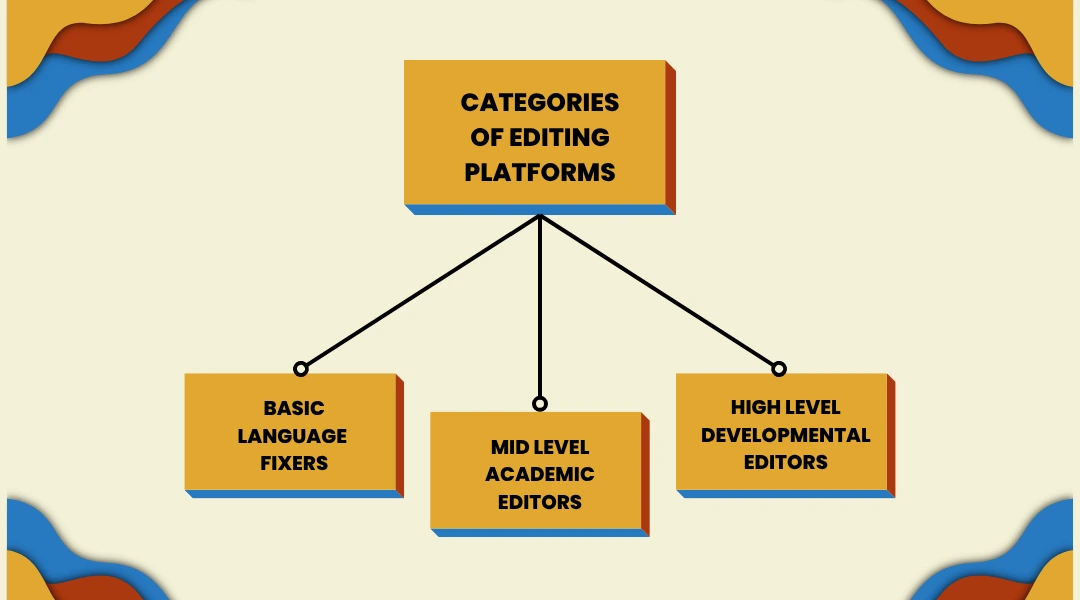
1. Basic Language Fixers
These services focus on grammar, spelling, and punctuation. Think of them as upgraded spell-check tools.
They:
- Correct sentence-level errors
- Improve readability slightly
- Rarely touch the argument or structure
For simple drafts, that might be enough.
For publication?
They are not even close.
2. Mid-Level Academic Editors
They offer copy editing services, along with light structural feedback—adjustments to sentence clarity, flow, and tone.
Typical features include:
- Improved sentence fluency
- Minor restructuring
- Consistency in terminology
But they usually avoid deeper critique.
Why?
Because it requires subject-matter understanding and more time—something many large-scale services don’t invest in.
3. High-Level Developmental Editors
These go deeper.
They analyze argument strength, logical consistency, and manuscript structure—what’s known as developmental editing services.
They focus on:
- Research narrative
- Logical flow between sections
- Strength of conclusions
This is where real academic improvement happens.
Unfortunately, very few services do this well—or honestly.
PaperEdit: What Sets It Apart
PaperEdit doesn’t try to be everything for everyone. It focuses on one thing: great academic improvement.
Here’s how it stands out:
1. Editing Beyond Grammar
PaperEdit doesn’t stop at surface-level fixes. It actively restructures weak arguments and improves coherence—something many dissertation editing services fail to do.
For example, instead of just correcting a sentence, it may flag:
- Logical gaps
- Weak transitions
- Unsupported claims
- Redundant arguments
This aligns with best practices outlined in Elsevier’s research guidelines, where clarity and argument strength are critical for publication success.
2. Human-Centered Academic Editing
Unlike AI-heavy platforms, PaperEdit emphasizes human expertise. It matters because academic nuance isn’t algorithm-friendly.
AI can:
- Fix grammar
- Suggest synonyms
- Improve readability
But it cannot:
- Understand research intent
- Evaluate argument strength
- Detect subtle inconsistencies
If you’ve ever had AI “edit” your paper into something technically correct but intellectually shallow, you already know the difference.
You can explore how this approach works in detail on How Professional Editing Improves Your Chances of Journal Acceptance.
3. Discipline-Aware Editing
Another overlooked factor: not all academic writing is the same.
PaperEdit editors are trained to handle:
- Clinical research vs theoretical papers
- Quantitative vs qualitative studies
- Structured vs narrative formats
Generic services often apply the same editing logic to every manuscript, resulting in inappropriate changes and a loss of meaning.
PaperEdit vs Other Editing Services: The Real Comparison
Let’s break this down without sugar-coating.
| PaperEdit | Others | |
| Editing Depth | Deep editing (structure + logic + clarity) | Mostly grammar and light phrasing |
| Transparency | Clear scope of edits and realistic outcomes | Vague promises like “publication-ready” without accountability |
| Specialization | Focused on academic manuscripts | General editing (blogs, resumes, fiction, etc.) |
| Feedback Quality | Actionable, critical feedback | Minimal or generic comments |
Many services advertise “advanced editing,” but in practice, they stop at sentence-level corrections.
According to the Committee on Publication Ethics (COPE), ethical editing must avoid making misleading claims. Overpromising is a red flag.
Generalists dilute quality, while academic editing requires domain-specific understanding.
Real editing challenges your work—it doesn’t just polish it.
Consistency Across Editors
One major issue with large editing platforms is inconsistency.
You may get:
- A highly skilled editor for one paper
- A basic-level editor for the next
PaperEdit maintains tighter quality control, ensuring consistency across projects—something rarely discussed but critically important for long-term researchers.
Where Other Services Still Compete
Let’s be fair—PaperEdit isn’t always the default choice.
Other services can be useful if:
- You only need copy editing services for grammar fixes
- You’re working with non-academic content
- Budget is your only priority
Some large platforms also offer faster turnaround due to scale. But speed without depth is a trade-off.
If your goal is publication—not just “clean English”—you need more than speed.
The Hidden Problem With Cheap Editing Services
Here’s the uncomfortable truth: cheap editing often costs more in the long run.
Why?
Because:
- Reviewers reject poorly structured papers
- You waste time on resubmissions
- Your research impact drops
- Your confidence as a researcher declines
A study highlighted in Nature emphasizes that poorly communicated research significantly reduces citation potential.
So the real question isn’t “How much does editing cost?”
It’s “How much does bad editing cost you?”
Understanding the Real Scope: Editing vs Rewriting
Many researchers confuse editing with rewriting—and that confusion leads to ethical risks.
Let’s clarify:
- Editing: Improves clarity, structure, and correctness
- Rewriting: Replaces your voice entirely
Ethical services—including PaperEdit—avoid ghostwriting. This aligns with academic integrity standards discussed on Wikipedia’s academic integrity page.
If a service offers to “rewrite your entire paper,” that’s not editing—that’s a red flag.
Turnaround Time vs Quality: The Trade-Off Nobody Talks About
Fast delivery is attractive—but it often comes at a cost.
High-quality editing requires:
- Careful reading
- Context understanding
- Iterative improvements
Services promising 24-hour “deep editing” are usually cutting corners.
PaperEdit prioritizes quality over unrealistic speed. That may not sound appealing—but it’s honest. And in academic publishing, honesty beats hype.
Comparison Test: How to Evaluate Any Editing Service
Before choosing between PaperEdit and other services, run this quick comparison test:
Ask these questions:
- Do they provide sample edits?
- Do they explain their editing process?
- Do they offer developmental feedback—or just corrections?
- Are their claims realistic?
- Do they respect academic integrity?
This is where understanding the contrast comparison definition matters. You’re not just comparing features—you’re contrasting depth, ethics, and impact.
The Psychological Edge: Confidence in Submission
Here’s something rarely discussed—editing quality affects your mindset.
When your manuscript is:
- Structurally sound
- Logically consistent
- Clearly written
You submit with confidence.
Poor editing, on the other hand, creates doubt:
- “Did I explain this properly?”
- “Will reviewers misunderstand this section?”
That hesitation shows—and it affects how you respond to reviewer comments.
PaperEdit’s deeper editing approach reduces that uncertainty, giving you a stronger position in the publication process.
Who Should Choose PaperEdit?
PaperEdit is not for everyone—and that’s intentional.
It’s best suited for:
- Researchers targeting indexed journals (Read How to Check If a Journal is Scopus Indexed and Why It Matters)
- Students working on high-stakes dissertations
- Authors who need structural improvement—not just grammar fixes
- Non-native English speakers aiming for clarity and precision (Explore Why Native English Speakers Still Need Academic Editing for Native English Speakers)
If you’re submitting to competitive journals, surface-level editing won’t cut it.
Who Might Prefer Other Services?
Other editing platforms may be enough if:
- You already have strong writing skills
- You only need proofreading
- Your work isn’t for publication
- You’re on a tight budget with low stakes
In these cases, basic academic editing services can do the job.
Final Verdict: Depth Always Wins
The PaperEdit vs other editing services debate comes down to one thing: depth vs convenience.
- If you want quick, cheap grammar fixes → other services work
- If you want great academic improvement → PaperEdit stands out
There’s no shortcut to strong research communication. Editing isn’t a final step—it’s part of the research process itself.
And if your goal is publication, credibility, and long-term impact, choosing the right editing partner isn’t optional. It’s strategic.