


Research takes time, effort, thoughtfulness and energy, and a computer and reliable Internet connection; therefore, if you work hard on your assignments and put in the time but don’t get the result you want, that is difficult. Comments from your professors/teachers often state, Poor clarity. Poorly communicated. Good information, but lacking in analysis. While students create much academic information through research, they are not confusing good or bad academic communications.
The problem is that very few students know the difference between having and using Academic Information, and this is one of the major sources of mistakes students make in higher education today. This is not just an issue of terminology; it is a phrase differences as it relates to how to differentiate those who acquire information only, and those that generate their own ideas, and it would affect the vehicles such as the thesis they create, as well as how well they perform in a third party (viva) examining them for credibility via logical argumentation based on their findings, rather than from evidence.
Learn more with The Difference Between Thesis and Journal Writing.
What constitutes academic information and why is it insufficient as an academic communicator?
Academic Information consists of evidence/data, and facts, as well as published case studies, statistics and evidence from institutions of writing (i.e., Peer Reviewed Journals, Textbooks etc.) and the like, published on-line or in physical locations. You do this through the process of looking for (finding) the evidence, reading it and writing it down (citing). Academic Information lacks value; it is devoid of the process to transform that intellectual property into a means to communicate academically (i.e., information by means of written word to convey a message).
Therefore, many academic (student writers) turn academic information into an academic transcription of information; hence, at this point they have lost out on one of the largest areas of mistakes that can occur while writing academically; this area is addressed in several textbooks on academic (student) writers.
Academic knowledge can be thought of as bricks; while these will always be useful to you, an incomplete pile of bricks does not constitute a finished building. Academic communication is the way to take raw material (the bricks) and create an aesthetically pleasing, functional building through a planned architectural design that includes aspects of both art and science.
Defining Academic Communication vs Academic Writing
The complexity of academic communication and academic writing is not a competition to decide which of the two is most important. The two are separate abilities that overlap and work together but are not interchangeable.
Academic writing is the traditional written form of scholarly communication. The rules associated with academic writing (citation style, use of the passive voice, disciplinary language, argument structure) are established and formalized; the focus of academic writing is on the use of evidence, logic, and formal language as a primary means of communication, with little to no emphasis on personal communication styles.
On the other hand, academic communication is a broader category that includes:
- Written Work (Essays, Dissertations, Reports)
- Oral Presentation/Presentation in Group Seminars
- Peer Review & Collaborative Knowledge Creation
- Visual Presentation of Data (Charts, Infographics, Posters)
- Digital and Multimedia Scholarly Work
You can be a great academic writer but still fail to use academic communication by not being understood by your audience, not having clarity and direction in the structure of your paper, or having your argument lost in all of the jargon used in your paper.
The winners of the Academic Writing Contest by the Harvard International Review are those papers that engage the reader as well as demonstrate knowledge. That's academic communication at work.
The Table: Breaking Down the Core Differences
Understanding the divide between academic information and academic communication becomes significantly clearer when you map it side by side.
| Dimension | Academic Information | Academic Communication |
| Definition | Data, facts, and documented knowledge | The intentional conveyance of ideas to an audience |
| Primary Mode | Passive absorption | Active expression and engagement |
| Output | Notes, bibliographies, data sets | Essays, presentations, published arguments |
| Audience Awareness | None required | Central to effectiveness |
| Skill Set Involved | Research literacy, source evaluation | Argumentation, clarity, structure, rhetoric |
| Measured By | Breadth and accuracy of sources | Persuasiveness, coherence, and analytical depth |
| Common Failure | Over-reliance on quotations without analysis | Poor structure or register mismatch with discipline |
| Academic Example | A well-annotated bibliography | A well-argued literature review |
| Institutional Value | Necessary foundation | Primary output evaluated by universities |
| Improvement Tool | Better databases, reading strategies | Editing, feedback, academic writing readability improvement techniques |
This table isn't decorative — it maps a competency gap that costs students grades, scholarships, and postgraduate opportunities every single year.
What Is Academic Performance? And Why Communication Drives It
Academic performance indicators are normally defined to be GPA, assignment scores and standardized assessment results, but directly related to these numbers, there's another sign of whether or not somebody has learned something; that's when a student is able to communicate what they have learned.
The National Center for Education Statistics has consistently demonstrated through studies that the ability to write well is one of the best indicators of success in all academic disciplines. However, because writing is typically taught as part of the process of doing research, this creates a gap in the structure of how writing is taught.
Above all else, a student who can retain information, but cannot communicate that information effectively will not be able to do well in the upper level classes where analysis and argumentation are more important than simply regurgitating information. In reality, the academic performance indicator is based more on this communication than on the actual knowledge of the subject matter.
Academic Readability: The Silent Differentiator
One very understated way to create much better readability of student papers is audience calibration. Before writing the very first word, a writer should ask themselves - Who is reading this paper? What does this reader need to read in order to leave believing what I have just written?
Improving readability in writing is not about writing something that is made easy to read. It's about eliminating any possible obstacles from standing between a writer's idea and a reader's understanding of that idea. Some concrete ways of doing this are as follows:
- Use of variety of sentence structures - By alternating between shorter and longer sentences, you can help prevent a reader's mind from getting bogged down in the same type of sentences. This is a good way to control the amount of emphasis you place on each sentence in your writing.
- Signposting: Phrases like "This section argues..." or "The implications here are threefold..." guide readers without condescending to them.
- Precise vocabulary over impressively long words: "Use" beats "utilize" in almost every academic context.
- Active voice where appropriate: Despite what some academic writing textbooks suggest, the passive voice can obscure agency and weaken arguments.
From Inquiry to Academic Writing: A Practical Guide, Fifth Edition by Stuart Greene and April Lidinsky is exceptional on this front — the book systematically unpacks how academic inquiry becomes communicable argument. It's one of the best bridges between research literacy and writing effectiveness currently available.
Also read, How to Balance Technical Accuracy with Readability in Research Writing?
The Role of Institutional Bodies: West Academic and the Academic Internship Council
Institutional frameworks shape how academic communication is taught, evaluated, and supported. Two bodies worth knowing:
West Academic is a major legal and academic publisher whose materials are used across law schools and graduate programs in the United States. Their approach to structuring academic content — logically sequenced, clearly argued, precedent-aware — reflects exactly what rigorous academic communication demands: not just knowing the law, but arguing it.
The Academic Internship Council plays a structural role in bridging classroom learning with professional application. Internship programs supervised under this body require students to produce reflective reports, communicate with supervisors, and translate theoretical knowledge into professional contexts. This is academic communication in its most applied form — and it's assessed not on what you know, but on how effectively you convey what you learned.
These institutions remind us that academic communication isn't confined to universities. It's a transferable professional competency, and organizations like the American Association of University Professors have long advocated for its integration into higher education standards.
What Academic Writing Focuses On — And What It Deliberately Excludes
This is a point that confuses even advanced students. Academic writing focuses on all of the following except personal anecdote, casual expression, emotional appeal without evidence, and subjective preference stated as fact. Understanding what academic writing excludes is as important as knowing what it includes.
Academic writing is built on:
- Claims — arguable, specific, defensible propositions
- Evidence — sourced, properly cited, contextually relevant
- Analysis — your interpretation of how evidence supports the claim
- Structure — logical sequencing of ideas that builds toward a conclusion
- Register — disciplinary tone appropriate to your field and audience
What it is not built on: flowery language, vague assertions, rhetorical questions without follow-through, or lists of facts without interpretive weight.
This is why students who have consumed enormous amounts of academic information still produce weak essays. They know the material. They have not mastered the form.
Improving this requires deliberate practice — and editorial support. Professional academic editing services, like those offered at PaperEdit, focus precisely on this gap: helping writers align their content with the communicative expectations of their discipline. When your argument is structurally sound but your sentence-level clarity is dragging it down, targeted editing closes that gap efficiently.
Communication Over Content: What High-Performing Students Do Differently
Research on academic performance consistently shows that top students in competitive programs don't just read more — they communicate more deliberately. Here's what that looks like in practice:
They draft with intention, not completion. High performers treat first drafts as thinking tools, not finished products. The act of writing clarifies the argument — they're not transcribing a conclusion, they're discovering one.
They seek feedback before submission. Whether through peer review, writing centers, or professional editing platforms like PaperEdit's proofreading service, the pattern is consistent: externalize the draft, get a reader's response, revise with that perspective integrated.
They read like writers. When studying a journal article, high performers aren't just extracting information. They're analyzing how the argument is constructed, how evidence is introduced, how counterarguments are addressed. They treat academic texts as communication models — not just information sources.
They understand their discipline's rhetorical conventions. A history essay and a psychology lab report share the same information-to-communication pipeline, but they operate under entirely different structural and stylistic rules. Knowing those rules is non-negotiable.
The Dissertation and Thesis: Where the Gap Becomes Critical
Nowhere is the distinction between academic information and academic communication more consequential than in dissertation writing. Students who reach this stage have, almost by definition, adequate access to academic information. The research is there. The reading is done.
What separates a compelling dissertation from a failing one is almost entirely communicative:
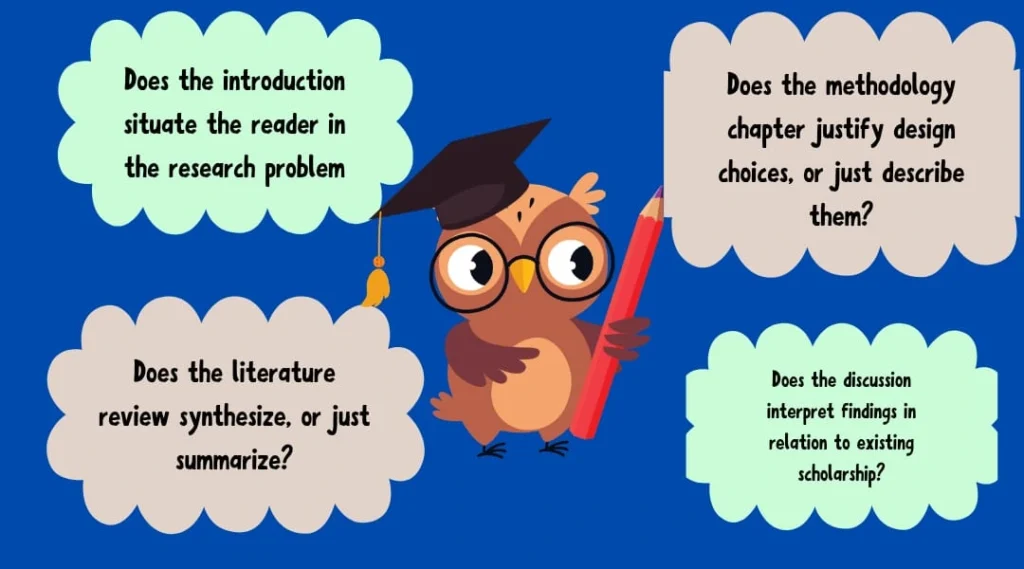
These are all communication tasks. None of them require more information — they require more deliberate, structured, audience-aware expression of the information already gathered.
Students navigating this stage benefit enormously from structured editorial support. Services that specialize in dissertation editing, like those at PaperEdit's dissertation editing page, don't alter your argument — they ensure your argument reaches the reader as you intended it to.
Academic Communication in the Digital Age
The landscape of academic communication has expanded dramatically. Today's scholars are expected to communicate through:
- Preprints and open-access repositories
- Academic social networks (ResearchGate, Academia.edu)
- Policy briefs and public-facing summaries
- Social media threads distilling research for general audiences
- Podcast appearances and recorded lectures
Each of these demands a different register, a different structure, a different awareness of what the audience brings to the interaction. The underlying skill — translating complex scholarly knowledge into purposeful, readable communication — remains constant.
This is why academic writing readability improvement techniques have gained significant attention in recent years. As scholarship becomes more publicly accessible, the ability to write clearly without sacrificing intellectual depth is increasingly valued by institutions, journals, and hiring bodies alike.
The Wikipedia overview of academic writing offers a useful baseline understanding of how the field is formally defined across disciplines — worth reading if you want a broader conceptual map of where academic communication sits historically and structurally.
Bridging the Gap: Practical Steps
If you've recognized a gap between your academic information gathering and your academic communication output, here's how to close it systematically:
Step 1 — Audit your current writing. Take your last graded piece of work. Highlight every sentence that conveys information. Then highlight every sentence that argues, interprets, or analyzes. If the first set far outnumbers the second, you have a communication problem.
Step 2 — Use structured feedback. Don't just ask "is this good?" Ask "is my argument clear?" "Does my structure support my thesis?" "Where did you lose me?"
Step 3 — Read disciplinary models. Find two or three highly-regarded articles in your field. Study how they're built, not just what they say.
Step 4 — Invest in editorial support before high-stakes submissions. Thesis chapters, grant applications, journal submissions — these deserve professional editorial review. Services like PaperEdit's academic editing exist precisely for this stage.
Step 5 — Practice synthesis, not summary. For every source you read, write two sentences: what the author argues, and what that means for your argument. This is the habit that transforms information into communication.
Conclusion: Stop Hoarding Information. Start Communicating Ideas.
The distinction between academic information and academic communication is not semantic — it has real consequences for grades, publications, and professional credibility. You can read every book in the library and still fail to communicate a single compelling idea if you haven't developed the structural, stylistic, and rhetorical skills that academic communication demands.
The goal of higher education was never information retention. It was always the production and communication of knowledge. The sooner students internalize that shift, the sooner their work starts reflecting their actual intelligence — not just their access to sources.
Information is the starting point. Communication is the destination.
Reference Books
1. Greene, S., & Lidinsky, A. (2021). From Inquiry to Academic Writing: A Practical Guide (5th ed.). Bedford/St. Martin's. A comprehensive guide bridging research literacy with structured academic argumentation, widely used in undergraduate writing programs across North America.
2. Swales, J. M., & Feak, C. B. (2012).Academic Writing for Graduate Students: Essential Tasks and Skills (3rd ed.). University of Michigan Press. A foundational text for graduate-level writers, focusing on genre conventions, disciplinary communication norms, and the rhetorical structure of academic texts