

Publishing isn’t just about discovery. It’s about discipline in communication. You can run a statistically sound study, gather meaningful data, and still face rejection—simply because your manuscript doesn’t meet the linguistic and structural expectations of a journal.
This is the uncomfortable truth: journals don’t publish effort. They publish clarity, rigor, and credibility. If your research doesn’t sound journal-ready, it doesn’t matter how good your data is.
This guide breaks down exactly how to transform your Research Sound Journal Ready. It explains how a rough academic draft can be turned into a publication-ready document that aligns with editorial standards across high-impact journals.
What “Journal-Ready” Actually Means (Beyond the Buzzword)
A journal-ready manuscript is not just “well-written.” It is strategically constructed to meet the expectations of editors, peer reviewers, and indexing databases.
At its core, it demonstrates:
- Precision in language
- Logical and predictable structure
- Objective, evidence-based tone
- Consistency in formatting and citations
- Field-appropriate terminology
The World Health Organization emphasizes that scientific writing must be clear, concise, and unambiguous. That’s not optional—it’s the minimum threshold.
In competitive spaces like amp research environments or submissions to good journals for publication, anything less than this standard is filtered out early.
The Psychology of Reviewers: Why Presentation Matters More Than You Think
Before diving into technical fixes, understand how reviewers think.
Peer reviewers are:
- Time-constrained
- Highly critical
- Focused on clarity and reproducibility
They are not there to interpret your work.
They are there to evaluate it.
If your writing:
- Forces them to reread sentences
- Buries key findings
- Uses inconsistent terminology
They assume the same lack of clarity exists in your research design.
That assumption alone can lead to rejection.
Even organizations like the Public Library of Science emphasize readability as a core factor in peer review decisions.
Stop Writing Like a Student — Start Writing Like a Contributor
Student writing tries to prove effort.
Journal writing aims to deliver insight.
Here’s the difference:
| Student Writing | Journal Writing |
| Explains everything | Focuses on relevance |
| Uses filler phrases | Uses direct statements |
| Emotionally framed | Objectively presented |
| Overuses transitions | Keeps flow tight |
Common Mistakes to Eliminate
- “This study aims to explore…” → Replace with: “This study evaluates…”
- “It is important to note…” → Remove entirely
- “In today’s world…” → Irrelevant in scientific context
In research science institute environments, writing is expected to be efficient—not decorative.
Your goal is not to sound smart.
Your goal is to be understood instantly.
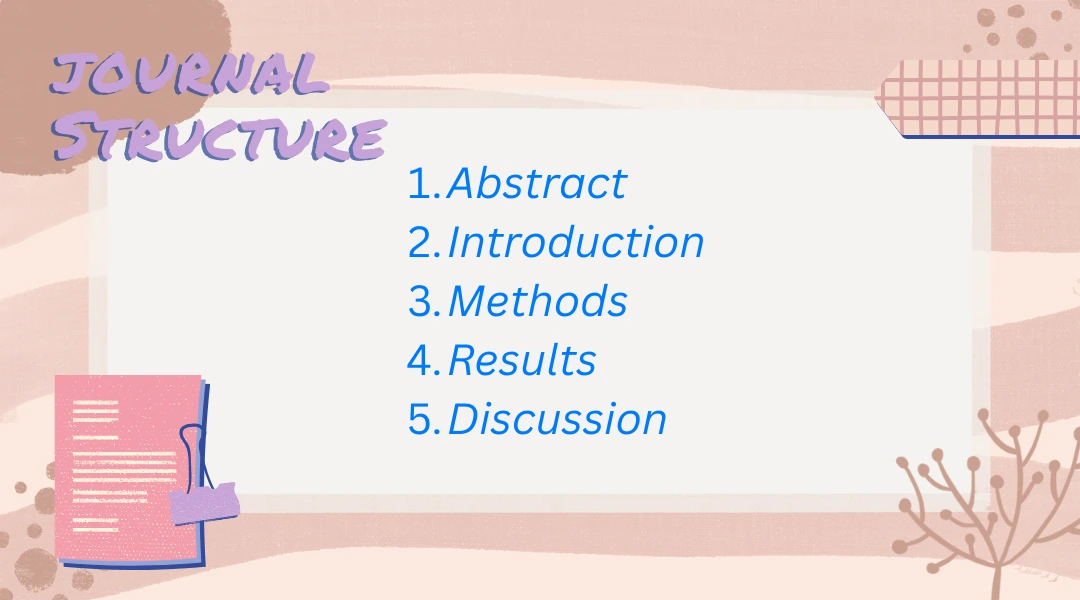
Mastering Structure: The Backbone of Journal Readiness
No matter how strong your research is, poor structure will weaken it.
A journal-ready paper follows a strict architecture.
Deviating from it signals inexperience.
Abstract: Your First (and Sometimes Only) Impression
Your abstract determines:
- Whether your paper gets read
- Whether it gets indexed
- Whether it gets cited
A strong abstract includes:
- Clear objective
- Defined methodology
- Key findings with data points
- Direct conclusion
Avoid:
- Background storytelling
- Vague phrases like “significant results were found.”
- Unquantified claims
This is especially critical for indexing in databases linked to the National Center for Biotechnology Information.
Introduction: Frame the Gap, Not the History
A weak introduction reads like a literature dump.
A strong introduction:
- Identifies a clear research gap
- Establishes relevance
- Ends with a precise objective
In fields like journals in public administration, introductions are concise and sharply aligned with policy or practice implications.
Methods: Where Credibility Is Won or Lost
Your methods section must answer one question:
Can another researcher replicate this study without contacting you?
If the answer is no, your paper is not journal-ready.
Include:
- Study design
- Sample details
- Data collection methods
- Analytical techniques
Avoid:
- Narrative storytelling
- Justifying obvious choices
- Missing procedural details
In roles like clinical research coordinator jobs, clarity in methodology is non-negotiable. The same standard applies to your manuscript.
Results: Pure Data, Zero Interpretation
This is where most manuscripts fail.
Results should:
- Present findings only
- Use tables and figures strategically
- Follow a logical sequence
Do NOT:
- Explain why the results occurred
- Compare with other studies
- Add opinions
That belongs in the discussion.
Discussion: Insight Without Overclaiming
Your discussion is your intellectual argument—but it must stay grounded.
A strong discussion:
- Interprets findings logically
- Connects to existing literature
- Acknowledges limitations
- Suggests realistic implications
Even in high-impact outlets like the BMC Public Health, discussions remain cautious and evidence-driven.
Overstating your findings is one of the fastest ways to lose reviewer trust.
Language Precision: The Silent Gatekeeper
Language is not just a communication tool—it’s a credibility signal.
Journal-ready writing is:
- Neutral
- Controlled
- Consistent
What to Avoid
- Emotional language (“remarkable,” “groundbreaking”)
- Personal bias (“we strongly believe”)
- Informal phrasing
What to Use
- Technical vocabulary
- Consistent tense (past for methods/results)
- Clear subject-verb structure
If your manuscript sounds like a blog post or opinion piece, it won’t survive peer review.
Research Design Signals That Undermine Your Writing
Even strong writing can’t hide weak research signals.
Watch for:
Overuse of Closed Questions
Using closed questions in research without justification makes your study look simplistic.
Instead:
- Explain why closed questions were necessary
- Connect them to your analytical framework
- Show how they support your conclusions
Weak Alignment Between Sections
Common issue:
- The objective doesn’t match the results
- Methods don’t support conclusions
This creates a disconnect that reviewers immediately flag.
Redundant or Inflated Language
Example:
“The results clearly demonstrate and show…”
This signals a lack of precision.
One word is enough.
Targeting the Right Journal: Strategy Over Guesswork
Submitting to the wrong journal wastes time.
To ensure journal readiness:
- Analyze 3–5 recent papers from your target journal
- Match tone, structure, and citation style
- Identify common patterns in accepted papers
For example, research aligned with institutions like the National Institutes of Health often prioritizes methodological rigor over narrative flow.
If your manuscript doesn’t match the journal’s style, it will feel out of place—no matter how strong the research is.
Editing Is a Strategic Step — Not a Cosmetic Fix
Most manuscripts are not submission-ready after the first draft.
Professional editing is not about grammar—it’s about:
- Structural refinement
- Logical clarity
- Tone alignment
- Reviewer readability
For example, platforms like Paperedit are committed to turning your research into journal-ready manuscripts. They offer services like proofreading to eliminate any language errors and present your findings in a strong, argumentative manner suited to top journal publication platforms.
While their formatting services allow your statistical data and draft to be presented as per ethical guidelines. They understand formatting is a critical aspect of presenting your work professionally and ensuring it meets the required standards. Journal manuscript formatting services and specialized APA and MLA formatting services cater to diverse academic and professional requirements. Therefore, we say such platforms focus on transforming raw drafts into coherent, publication-ready manuscripts.
Not only this, Paperedit has a dedicated blogs section to guide you regarding every aspect to make your manuscript ready for acceptance.
If your study involves complex datasets, ensure your results are not just correct—but convincingly presented- refer to this guide:
And for language clarity, ensure your manuscript meets international publication standards without any mistakes-referto this guide:
Skipping this step is the critical stage where most researchers lose.
Learning From Published Work — The Right Way
Reading published papers helps—but copying them doesn’t.
Instead:
- Analyze how arguments are structured
- Observe how evidence is presented
- Study sentence construction
Databases like those supported by the National Center for Biotechnology Information provide access to high-quality examples.
Use them as benchmarks—not templates.
Even tools like journal prompts can guide structure—but your scientific voice must remain original.
The Role of Consistency in Journal Readiness
Inconsistent manuscripts signal carelessness.
Check for:
- Terminology consistency
- Formatting uniformity
- Citation style accuracy
- Figure and table alignment
Even minor inconsistencies can frustrate reviewers and reduce credibility.
Ethical Writing: Non-Negotiable in Journal Publishing
Journal readiness isn’t just technical—it’s ethical.
Avoid:
- Data manipulation
- Selective reporting
- Plagiarism
Follow ethical standards aligned with organizations like the World Health Organization and global publishing guidelines.
Ethical clarity strengthens reviewer trust—and long-term credibility.
Final Pre-Submission Checklist
Before submitting, ask:
- Is every section aligned with the objective?
- Are results clearly presented without interpretation?
- Is the discussion grounded and realistic?
- Is the language precise and neutral?
- Does the manuscript match the target journal’s style?
If any answer is uncertain, your manuscript needs more work.
The Bottom Line
Making your research sound journal-ready is not about last-minute polishing. It’s about writing with precision, structure, and intent from the beginning.
Strong research without a strong presentation doesn’t get published.
To get your research sound journal ready, stop writing to explain—and start writing to convince.
Because in academic publishing, clarity isn’t optional. It’s everything.