

Why Confidentiality is the Real Currency in Academic Editing?
In academic publishing, ideas are more valuable than polished sentences. A draft manuscript can contain years of research, unpublished datasets, experimental designs, and sometimes even commercially sensitive findings. That is exactly why Confidentiality in Academic Editing is not optional—it is structural.
Yet, many researchers still treat editing as a purely linguistic service. But that mindset is outdated.
Modern academic editing services sit at the intersection of language refinement, research integrity, and data protection. When confidentiality fails, the damage is not just editorial—it can affect publication rights, intellectual property claims, and institutional trust.
Hence, this guide breaks down how confidentiality actually works in academic editing, what standards you should expect, and how to evaluate whether an editor or service is truly secure or just claiming to be.
The Core Meaning of Confidentiality in Academic Editing
At its simplest, confidentiality means one thing: your manuscript stays yours.
But in practice, Confidentiality in Academic Editing is multi-layered. It includes:
- Protection of unpublished research content
- Controlled access to files and drafts
- Ethical handling of author identity and affiliations
- Secure communication channels
- No reuse or redistribution of academic material
- Proper deletion or archival policies after completion
This is not just professionalism—it is research ethics.
Editors are trusted with intellectual property before the world ever sees it. That trust is fragile.
Confidentiality Framework in Academic Editing (Table Overview)
To understand how confidentiality actually operates in real editorial workflows, here is a structured breakdown:
| Confidentiality Component | What It Means | Risk If Ignored | Best Practice |
| File Security | Secure storage of manuscripts and drafts | Data leaks, unauthorized access | Encrypted storage + restricted access |
| Editor Access Control | Only assigned editors handle files | Idea theft or exposure | Role-based access systems |
| Communication Privacy | Emails and feedback remain confidential | Exposure of the research strategy | Secure platforms + limited sharing |
| Non-Disclosure Boundaries | No sharing or reuse of content | Academic misconduct risks | Signed NDAs when required |
| Data Sensitivity Handling | Proper treatment of datasets and findings | Ethical violations | Compliance with research ethics standards |
| Post-Project Deletion | Removing files after completion | Long-term data exposure | Secure deletion protocols |
| Identity Protection | Author and institution confidentiality | Reputation risks | Anonymized workflows when needed |
This framework is what separates professional editing from informal or unsafe services.
Why Confidentiality Matters More Than Ever in 2026
Academic publishing has changed. Manuscripts are no longer just Word documents—they are data-rich research ecosystems.
A single file can include:
- AI-generated analyses
- Clinical or survey data
- Funding agency references
- Reviewer responses
- Supplementary datasets
That makes confidentiality not just important—but technically complex.
Global research ethics bodies increasingly emphasize data protection standards similar to those discussed in medical governance frameworks and institutional review boards.
Even tools like the certificate of confidentiality in research contexts highlight a broader principle: sensitive information must be shielded from unauthorized disclosure under specific conditions.
While that certificate is typically used in regulated research environments, the idea applies directly to editing workflows: privacy must be actively protected, not assumed.
Confidential Information Memorandum vs Academic Editing Confidentiality
Many people confuse editorial confidentiality with business confidentiality tools, such as a confidential information memorandum (CIM).
A CIM is typically used in financial or corporate transactions to disclose sensitive company information under controlled conditions.
Academic editing is different, but the logic overlaps:
- Both involve sensitive pre-publication information
- Both require controlled distribution
- Both rely on trust-based access systems
However, academic manuscripts are even more sensitive in one way: they often represent the first disclosure of knowledge. That makes them more vulnerable to intellectual appropriation.
What a Confidentiality and Nondisclosure Agreement Actually Does
A common question from researchers is: What is a confidentiality and nondisclosure agreement?
In academic editing, an NDA is a legal document that ensures:
- Editors cannot share or reuse manuscript content
- Third parties are not given access
- Intellectual property remains with the author
- Legal consequences exist for breaches
NDAs are especially important when dealing with:
- Industry-sponsored research
- Patent-related studies
- Medical or clinical data
- High-impact journal submissions
However, not every project requires an NDA. Ethical academic paper editing providers already operate under strict internal confidentiality policies. NDAs are an additional layer—not a replacement for good systems.
Learn more about NDAs with Wikipedia.
Academic Editing Services: What Safe Confidentiality Looks Like
Not all academic editing services operate at the same standard.
Strong confidentiality practices usually include:
1. Controlled Workflow Systems
Manuscripts are assigned to specific editors only, not open teams.
2. Secure File Transmission
Encrypted uploads or secure portals are used instead of open email chains.
3. No Third-Party Sharing
Documents are never outsourced without consent.
4. Editor Accountability
Editors are trained and bound by ethical publishing standards.
5. Transparent Retention Policies
Clients know how long files are stored and when they are deleted.
Without these systems, confidentiality becomes a marketing claim rather than a working principle.
Try Paperedit Now. Since they have carefully crafted the procedure to ensure all these critical checks.
Hence, improve your manuscripts with tha their secure Manuscript Proofreading and Formatting services.
Confidentiality in Academic Editing Jobs: The Editor’s Responsibility
If you work in academic editing jobs, confidentiality is not just expected—it is enforced professionally.
Editors are responsible for:
- Protecting unpublished hypotheses
- Avoiding any form of data reuse
- Maintaining neutrality and objectivity
- Respecting embargoed research timelines
- Avoiding discussion of client work in public or informal settings
This aligns with general confidentiality principles found in professional ethics frameworks across publishing and research industries.
The editorial role is not ownership—it is stewardship.
Academic Editing and the Research Writing Process
Confidentiality is not limited to final manuscripts. It extends across the entire research writing pipeline.
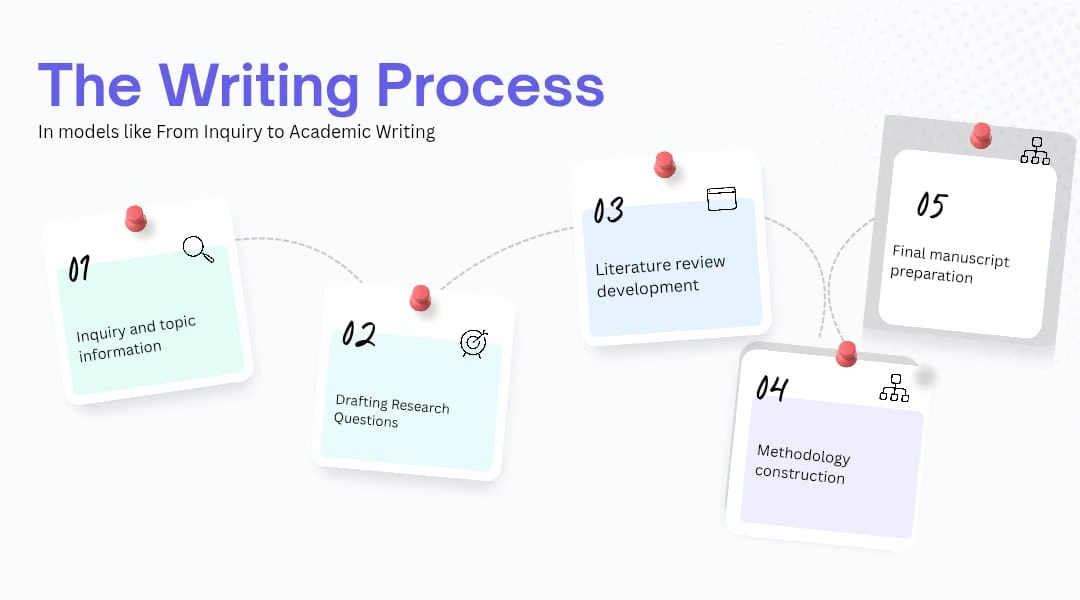
At every stage, sensitive intellectual material is generated.
That means confidentiality begins long before submission.
Even early-stage ideas can carry academic or commercial value.
Learn more about academic writing with our guides:
- 13 Academic Writing Rules That Will Transform Your Papers.
- Academic Writing Tone: Professional Without Sounding Robotic
- Writing for Reviewers vs Readers
Common Misunderstandings About Confidentiality
Many researchers assume confidentiality automatically exists. It does not.
Here are some common misconceptions:
“Small editing services are always safe.”
Not necessarily. Size does not guarantee security systems.
“Once I delete the email, my data is safe.”
False. Files may still exist on external servers or backups.
“Editors don’t care about my data.”
Most professionals do—but systems matter more than intentions.
“NDAs solve everything.”
NDAs support legal protection but do not replace operational security.
Understanding these gaps helps researchers make better decisions.
How to Evaluate a Safe Academic Editing Provider
Before sharing your manuscript, check:
- Do they explain confidentiality policies clearly?
- Do they restrict editor access?
- Do they use secure file transfer systems?
- Do they allow NDA requests?
- Do they clarify file deletion timelines?
If answers are vague, that is a red flag.
High-quality academic editing services treat confidentiality as part of infrastructure, not marketing.
The Future of Confidentiality in Academic Editing
By 2026 and beyond, confidentiality will become even more technical due to:
- AI-assisted editing workflows
- Cloud-based collaboration systems
- Cross-border research collaboration
- Increased journal data transparency requirements
This means editors must balance two opposing forces:
- Openness for collaboration
- Strict protection of unpublished work
The future editor is not just a language specialist—they are a data steward.
Conclusion: Confidentiality Is Not a Feature—It Is the Foundation
At its core, Confidentiality in Academic Editing is about respect—respect for authors, ideas, institutions, and the research process itself.
Without it, editing loses credibility. With it, editing becomes a trusted bridge between raw research and published science.
Whether you are a researcher, editor, or service provider, the expectation is clear:
Protect the work before it becomes public knowledge.
Anything less is not academic editing—it is exposure.
Reference Sites