

Is Professional Editing Allowed?
Academic publishing runs on integrity — not perfection.
Yet one recurring anxiety continues to circulate among researchers:
Does using a professional editor violate journal policy?
Let’s be clear.
Under nearly every recognized professional editing journal policy, language editing is allowed. What is not allowed is concealed authorship, intellectual substitution, or research manipulation.
This article breaks down what journals actually say — grounded in policy, not rumor.
What Counts as Professional Editing?
Professional editing refers to improving presentation — not rewriting scientific ownership.
It typically includes:
- Proofreading (grammar, punctuation, formatting)
- Academic proofreading (discipline-specific clarity)
- Structural refinement (flow, coherence)
- Journal formatting alignment
It does not include:
- Ghostwriting
- Changing data
- Reinterpreting results
- Replacing intellectual contribution
The International Committee of Medical Journal Editors (ICMJE) clearly defines authorship as intellectual contribution and accountability. Language support alone does not qualify for authorship — and it does not violate policy either.
Editing improves communication. It does not transfer ownership.
Academia follows unique language patterns and tones. Hence, writing for reviewers is quite different from writing for readers.
What Journal Policies Actually Say
If you read journal author guidelines closely, the message is consistent:
- Authors remain responsible for content.
- Editorial assistance must not alter scientific meaning.
- Transparency is encouraged.
- Ethical disclosure matters.
The Committee on Publication Ethics (COPE) emphasizes accountability and transparency in professional practice examination of manuscripts.
Language support is acceptable. Undisclosed drafting is not.
This is where many researchers confuse “professional formal standards” with “strict prohibition.” Journals are strict about integrity — not about grammar correction.
Proofreading vs Academic Proofreading: The Policy Difference
Not all editing is equal. Journals recognize the distinction.
| Type of Service | What It Includes | Allowed Under Journal Policy? | Risk Level |
| Basic Proofreading | Grammar, spelling, punctuation | Yes | Very Low |
| Academic Proofreading | Terminology accuracy, clarity, discipline tone | Yes | Low |
| Substantive Editing | Structure refinement, logical flow | Yes (if content unchanged) | Moderate |
| Ghostwriting | Drafting manuscript on behalf of author | No | High |
| Data Manipulation | Altering results or analysis | Strictly Prohibited | Severe |
Under professional editing journal policy, the key test is simple:
Did the editor change the science?
If the answer is no, you are within ethical boundaries.
At PaperEdit, our proofreading service focuses strictly professionals on clarity, consistency, and technical precision — never on altering findings.
Where Authors Cross the Line
Journals strictly professionals serving on editorial boards flag manuscripts when:
- Entire sections are rewritten without disclosure
- Statistical interpretations are altered
- Conclusions are reshaped
- Third parties draft manuscripts without acknowledgment
According to the U.S. Office of Research Integrity (ORI), authors retain full responsibility for research accuracy — regardless of professional assistance.
Hiring an editor does not dilute accountability.
You own the work. Always.
Visual Breakdown: Ethical vs Unethical Editing
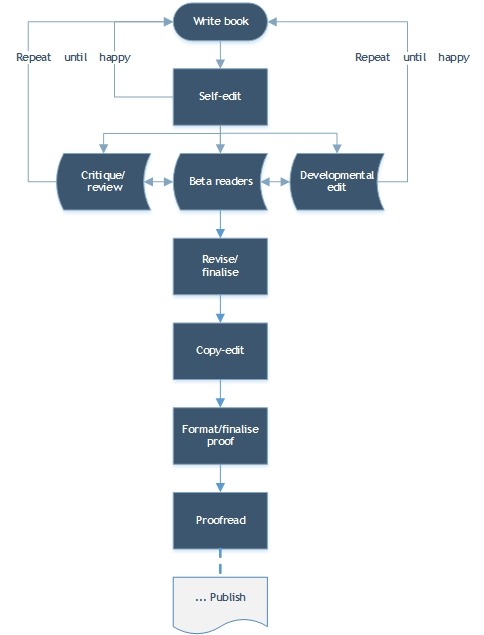
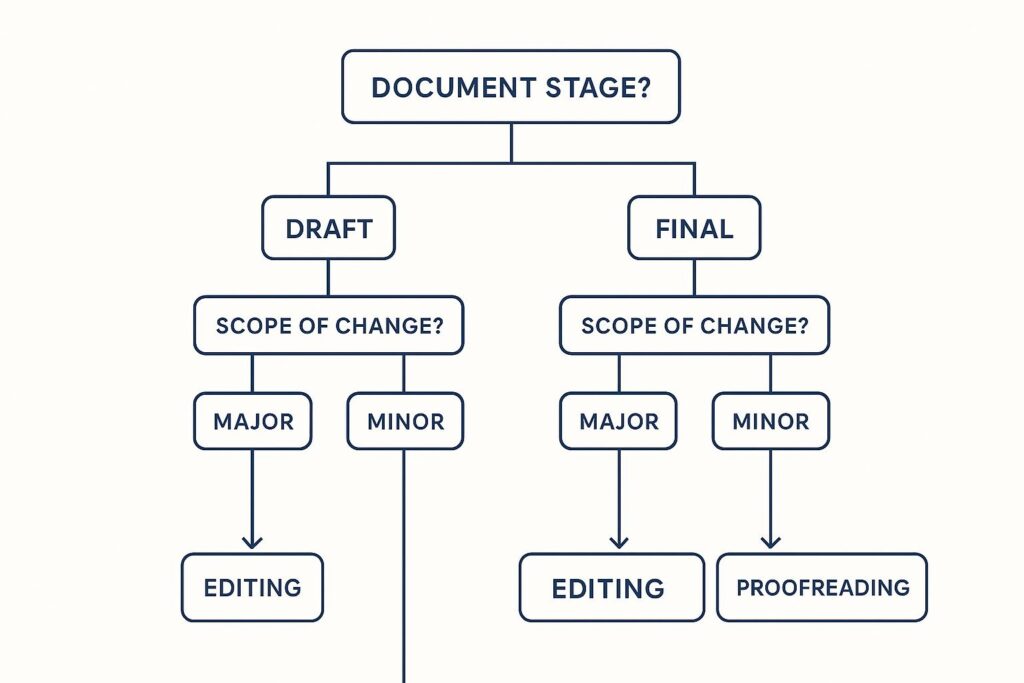
The distinction is not subtle:
- Ethical editing = clarity enhancement
- Unethical intervention = intellectual substitution
If editing improves readability while preserving argument and data, it aligns with professional practice examination standards.
If it replaces intellectual contribution, it violates them.
Do Journals Require Disclosure?
Some do. Many recommend it.
A simple acknowledgment such as:
“The authors thank a professional editing service for language assistance.”
is typically sufficient.
The World Association of Medical Editors (WAME) supports transparency in writing assistance to maintain credibility.
Disclosure protects you. Concealment exposes you.
Professional editing journal policy is built around openness, not secrecy.
Why High-Quality Editing Strengthens Integrity
Poor language can distort meaning.
A misplaced modifier can change statistical interpretation. An unclear limitation statement can weaken credibility.
Editing ensures:
- Statistical clarity
- Logical coherence
- Terminology precision
- Reviewer readability
Many journals explicitly recommend language editing before submission to reduce peer-review friction.
Editing does not game the system. It prepares your work for fair evaluation.
What Journals Strictly Prohibit
Here’s where the boundary becomes firm.
Journals strictly professionals enforce against:
- Ghostwritten manuscripts
- Purchased authorship
- Undisclosed drafting
- Fabricated references
- Manipulated figures
- Manipulated images
The U.S. National Library of Medicine outlines authorship requirements tied to intellectual responsibility.
If someone drafted your research argument — they must qualify for authorship or be acknowledged appropriately.
Professional editing journal policy protects transparency, not exclusivity.
The Professional Practice Examination Standard
Think of editing like laboratory equipment calibration.
It improves measurement accuracy but does not generate results.
Under professional practice examination principles:
- Authors design research.
- Authors analyze data.
- Authors interpret findings.
- Editors refine presentation.
We clearly state our boundaries: we edit language, not science.
That distinction is what keeps editing ethical.
Should Early-Career Researchers Use Editing Services?
Yes — especially non-native English speakers navigating high-impact journals.
Language barriers should not suppress research impact.
Responsible academic proofreading:
- Preserves author voice
- Enhances clarity
- Strengthens readability
- Maintains intellectual ownership
If you're preparing a larger academic document, structured editing through our platform thesis edit ensures professional formal standards without crossing ethical limits.
Using support is not a weakness. Concealing authorship is.
Final Verdict
Is professional editing allowed?
Yes.
Under virtually every major professional editing journal policy, proofreading and academic proofreading are permitted — provided authors retain full responsibility and transparency.
What journals prohibit is misrepresentation.
Ethical editing sharpens communication.
Unethical intervention distorts authorship.
Know the difference. Stay within it.
Publishing is built on trust. Protect yours.