


Tools + Methods You Need to Understand
Plagiarism isn’t just a technical issue—it’s a credibility killer. If you’re submitting to serious journals, assume one thing: your manuscript will be screened, dissected, and cross-checked before it even reaches peer reviewers. The systems behind this process are smarter than most authors realize.
This is how journals detect plagiarism today—no myths, no shortcuts, just the real mechanisms you’re up against.
The Reality: Journals Don’t “Guess” Plagiarism
Forget the idea that editors casually skim papers looking for copied text. Modern journals rely on automated screening pipelines before human evaluation even begins.
Most reputable publishers integrate plagiarism detection tools into submission systems. If your similarity score crosses a threshold—or triggers suspicious patterns—the manuscript is flagged immediately.
Organizations like the Committee on Publication Ethics have set clear standards: plagiarism isn’t just copying text—it includes data manipulation, duplicate publication, and idea theft.
For a formal definition, journals often align with guidance from the U.S. Office of Research Integrity, which outlines misconduct as fabrication, falsification, and plagiarism combined—not isolated behaviors.
The message is simple: journals don’t rely on intuition.
They rely on systems, policies, and enforceable standards.
Core Tools Used by Journals to Detect Plagiarism
1. Similarity Detection Software
The backbone of plagiarism screening is software—fast, ruthless, and database-driven.
The most widely used tools include:
- Turnitin
- iThenticate
- Grammarly
Among these, iThenticate dominates academic publishing because it scans against:
- Cross-publisher journal databases
- Preprint repositories
- Conference archives
- Subscription-only academic content
This is why what looks “original” to you may already exist somewhere in the literature.
If you’re searching for the best plagiarism checker, understand this: journals are not using free tools. They use enterprise-grade systems with deeper indexing and algorithmic pattern recognition.
2. Blackboard Plagiarism Detection Systems
In academic institutions, Blackboard plagiarism detection systems are widely used before submission.
Platforms like Blackboard integrate plagiarism tools to screen student and early-stage research work.
These systems are useful for catching basic overlap, but they fall short in:
- Detecting cross-journal duplication
- Identifying structural plagiarism
- Accessing proprietary publisher databases
Translation: Passing Blackboard doesn’t mean you’ll pass journal screening.
It just means you cleared the first, weakest filter.
3. Cross-Database and Publisher Networks
Here’s what most authors underestimate: publishers collaborate.
Major publishing groups like Elsevier and Springer Nature maintain interconnected databases. Your submission isn’t just checked against “the internet”—it’s compared against millions of previously submitted and published manuscripts.
This includes:
- Rejected manuscripts
- Under-review submissions
- Retracted articles
- Supplementary datasets
So even unpublished duplication can trigger detection.
Beyond Software: Editorial Intelligence Still Matters
Software flags similarity.
Editors decide intent.
Once a manuscript is flagged, editors assess:
- Context of overlap
- Citation accuracy
- Degree of paraphrasing
- Structural similarity
- Intellectual originality
This is where many authors fail. They assume rewriting sentences is enough. It’s not.
If your structure mirrors another paper—even with different wording—it can still be considered plagiarism.
According to Nature Research editorial policies, unattributed reuse of ideas or frameworks qualifies as misconduct—even when the wording is technically original.
Editors are trained to detect patterns that software cannot fully interpret: argument flow, hypothesis framing, and methodological imitation.
Types of Plagiarism Journals Actively Detect
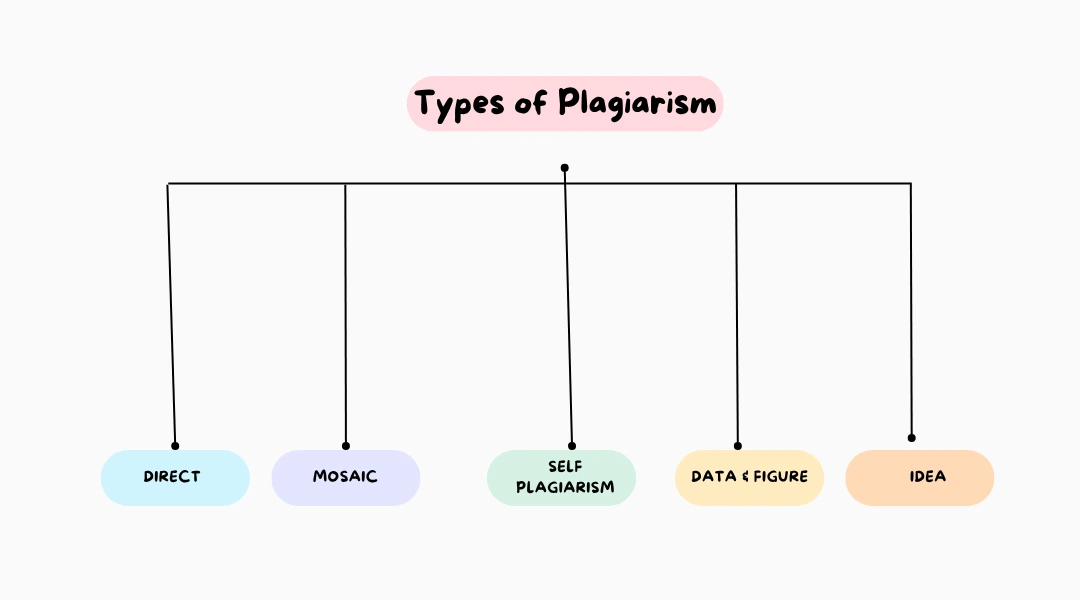
1. Direct Plagiarism
Copy-paste without attribution. It still happens. It still gets rejected instantly.
2. Mosaic Plagiarism
Blending copied fragments into original writing. Harder to detect—but modern tools flag phrase-level similarity effectively.
3. Self-Plagiarism
Reusing your own published work without disclosure.
This includes:
- Reusing introduction sections
- Republishing similar datasets
- Submitting slightly modified versions of previous papers
Within the framework of Academic Integrity, self-plagiarism is treated as deceptive because it inflates publication records.
4. Data and Figure Plagiarism
Reusing tables, graphs, or images without permission or citation.
Even if you recreate a figure visually, if the underlying data is reused without acknowledgment, it counts.
5. Idea Plagiarism
This is the most subtle—and the most dangerous.
If your research question, conceptual model, or analytical framework is clearly derived from another work without citation, editors will catch it during peer review.
Is Plagiarism Illegal? The Legal Side
Let’s be precise: plagiarism is primarily an ethical violation—but it can cross into illegality.
Plagiarism becomes illegal when it violates copyright law. That happens when:
- You reproduce protected content without permission
- You distribute copyrighted material as your own
- You reuse proprietary data unlawfully
Legal frameworks explained by authorities like the U.S. Copyright Office show that intellectual property misuse can lead to legal consequences beyond academic penalties.
However, most journal actions remain within academic governance:
- Retractions (Also explore How Image Manipulation Accidents Trigger Retractions)
- Blacklisting from submission systems
- Institutional reporting
- Funding withdrawal
So while not every case is illegal, every case is professionally damaging.
Real Cases of Plagiarism in Scientific Journals
Plagiarism isn’t rare—it’s just quietly handled.
Public databases and watchdog platforms consistently report cases of plagiarism in scientific journals. These include:
- Duplicate publications across multiple journals
- Translated plagiarism (copying from non-English sources)
- Recycled dissertation content submitted as new research
- Image duplication across unrelated studies
Publishers like Elsevier and Springer Nature regularly issue retraction notices that outline these violations.
What’s striking is not just the frequency, but the profile of authors involved. Many are experienced researchers who underestimate detection systems or assume minor overlap would go unnoticed.
It doesn’t.
The “Google Our Systems Have Detected” Misconception
You’ve probably seen messages like:
“Google, our systems have detected unusual traffic…”
This has nothing to do with plagiarism detection.
Google monitors user behavior, not academic originality. Its systems are designed to detect bots, scraping activity, or unusual query patterns—not copied research content.
Journals do not rely on Google search to detect plagiarism.
They rely on proprietary databases, publisher collaborations, and specialized algorithms.
Confusing these systems leads to false confidence—and that’s where authors get blindsided.
What Plagiarism Is NOT (Antonyms of Plagiarism)
To understand plagiarism, flip the concept.
The antonyms of plagiarism define what journals actually expect:
- Original synthesis of ideas
- Transparent citation practices
- Independent data generation
- Clear acknowledgment of influences
- Ethical paraphrasing
Good research writing isn’t about “passing” detection tools. It’s about contributing something that stands on its own intellectual merit.
If your manuscript depends heavily on existing phrasing or structure, it’s already at risk.
Advanced Detection Signals You Probably Didn’t Know
Journals don’t just look at text similarity.
They analyze patterns.
Some advanced signals include:
| Patterns | Description |
| Citation anomalies | References that don’t match the content |
| Writing style shifts | Sudden changes in tone or vocabulary |
| Inconsistent terminology | Mixing terms from different sources |
| Unusual phrasing clusters | Rare phrases appearing together (a sign of copying) |
These are subtle—but powerful indicators.
Editors and reviewers often detect these inconsistencies faster than software.
How to Stay Clean: Practical Strategies That Actually Work
You don’t need hacks.
You need discipline.
1. Write From Understanding, Not Sources
If you can’t explain a concept without looking at a paper, you don’t understand it yet.
2. Cite Early, Not Later
Don’t patch citations at the end. Integrate them during writing.
3. Use a Pre-Submission Check
Run your manuscript through the best plagiarism checker available to you—but treat it as a diagnostic, not a guarantee.
4. Avoid Structural Copying
Don’t replicate another paper’s flow, headings, or argument sequence.
5. Disclose Reuse Transparently
If any part of your work overlaps with previous publications, declare it clearly.
6. Maintain Version Control
Track your drafts. This prevents accidental reuse of old content without citation.
For broader ethical frameworks, global guidance from organizations like the World Health Organization emphasizes transparency and accountability in research reporting.
Internal Resources for Deeper Editing Control
If you’re serious about clean manuscripts, you need structured editing—not guesswork.
For example, understanding What Counts as Plagiarism in 2025? Updated Ethical Guidelines can drastically reduce your unintentional plagiarism risks by improving clarity and citation accuracy.
Refining your manuscript with the guidelines from 13 Academic Writing Rules That Will Transform Your Papers helps eliminate the patchwork writing style that often leads to mosaic plagiarism.
You should also explore Weak Arguments in Academic Papers (And How to Fix Them), which trains you to build arguments from understanding—not borrowed phrasing.
Writers who consistently avoid plagiarism also focus on avoiding common submission mistakes and developing credible research narratives that reflect genuine intellectual contribution.
Read Most Common Mistakes in Research Methodology Sections (And How to Avoid Them).
This isn’t about tools—it’s about habits.
Final Take: Detection Is Smarter Than You Think
Journals detect plagiarism using a hybrid model:
- Automated similarity scanning
- Cross-database comparison
- Editorial and peer review judgment
- Pattern recognition beyond text
You’re not just being checked—you’re being evaluated for integrity.
Trying to outsmart the system is a losing strategy.
Writing with originality, clarity, and transparency is the only approach that holds up—every time.