

Why It’s Silently Killing Your Publication Record
You’re not stuck because your research is weak. You’re stuck because you’re hesitating.
The fear of rejection in academic publishing is one of the most under-discussed barriers in research careers. It doesn’t just delay submissions—it reshapes decisions, lowers ambition, and quietly reduces your publication output.
And here’s the uncomfortable truth: journals aren’t rejecting you as much as you’re pre-rejecting yourself.
This isn’t about motivation. It’s about understanding how fear operates inside the publishing ecosystem—and how to dismantle it without compromising academic integrity.
The Hidden Cost of Fear in Academic Publishing
Rejection is built into the system. Even top-tier journals reject the majority of submissions. According to data from leading publishers, acceptance rates for high-impact journals can fall below 10% (source: Wikipedia).
Yet researchers behave as if rejection is a personal failure—not a statistical norm.
That mindset creates three immediate consequences:
- Delayed submissions: Papers sit in drafts for months or years
- Over-editing paralysis: Endless revisions without submission
- Journal under-targeting: Choosing low-impact journals out of fear
There’s a deeper cost most people ignore: compounding loss.
Every delayed submission doesn’t just cost you one opportunity. It costs:
- Potential citations that never accumulate
- Collaborations that never happen
- Funding prospects that depend on your publication record
Peer review discussions in academic publishing news often highlight inefficiencies not just in editorial systems, but in author behavior.
You’re not just losing time. You’re losing trajectory.
Why Fear of Rejection Feels So Intense
Academic identity is fragile. Your research is not just work—it’s your reputation.
That’s why rejection triggers:
- Self-doubt (“Maybe I’m not good enough”)
- Imposter syndrome (“I don’t belong in top journals”)
- Social comparison (“Others are publishing, I’m not”)
But there’s another layer: visibility anxiety.
Publishing is exposure. Once your work is out there, it can be criticized, challenged, or even dismantled. That level of scrutiny is uncomfortable—especially early in your career.
The system amplifies this pressure. Competitive funding, promotion metrics, and publication counts all reinforce the idea that rejection equals failure.
Organizations like the Committee on Publication Ethics emphasize that rejection is a standard outcome—not a judgment of worth.
But knowing that intellectually doesn’t erase the emotional response.
You don’t overcome fear by ignoring it. You overcome it by understanding exactly how it manipulates your decisions.
The Peer Review System Isn’t Your Enemy
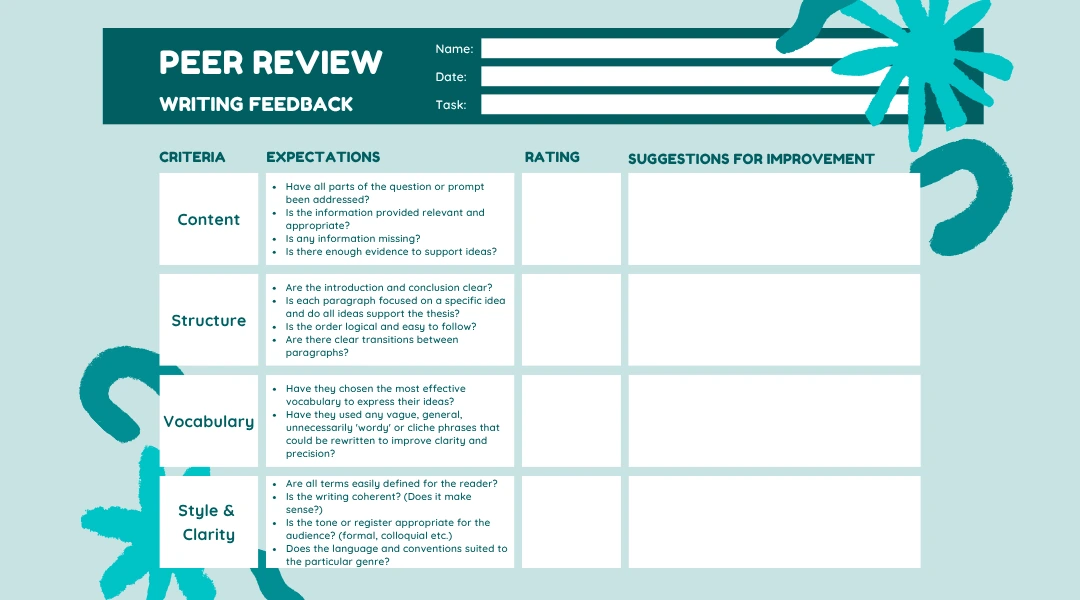
Peer review feedback template
Let’s get one thing clear: peer review is not designed to discourage you.
It’s designed to filter, refine, and improve research quality.
Still, many researchers interpret reviewer comments as attacks rather than feedback. That misinterpretation is costly.
According to academic publishing news in December 2025, editorial boards are increasingly concerned about authors withdrawing after initial critique instead of revising. This trend is alarming—not because reviewers are harsh, but because authors are disengaging too early.
This is a behavioral issue, not a system flaw.
If you reframe peer review correctly, rejection becomes:
- A diagnostic tool, not a verdict
- A revision roadmap, not a dead end
- A filter for journal fit, not research value
The strongest authors aren’t those who avoid rejection. They’re the ones who use rejection strategically.
For a deeper breakdown of how to interpret reviewer feedback, review this guide: How to Respond to Reviewer Comments Without Destroying Your Manuscript. It explains how to convert critique into acceptance-ready revisions.
You’re Probably Aiming Too Low (Because of Fear)
One of the most damaging outcomes of fear is strategic self-sabotage.
Researchers often:
- Avoid high-impact journals
- Submit prematurely to “safer” options
- Lower the perceived value of their own work
This creates a long-term positioning problem.
You may become a published academic, but your work doesn’t gain the visibility or recognition it deserves. Over time, this affects:
- Citation metrics
- Institutional reputation
- Career advancement opportunities
Top journals expect rejection rates to be high. Submitting there is not arrogance—it’s alignment.
The real risk isn’t rejection.
The real risk is never testing your work at the level it deserves.
If you’re unsure how to match your paper with the right journal, this breakdown on Publish Research as a Student clarifies selection strategies based on scope, impact, and acceptance trends.
Over-Editing Is Fear in Disguise
You tell yourself you’re “refining the manuscript.”
But what you’re really doing is delaying judgment.
Perfectionism is one of the most socially acceptable forms of fear in academia.
It looks productive—but it’s not.
Here’s how it shows up:
- Rewriting the same paragraph repeatedly
- Waiting for “one more dataset.”
- Avoiding submission until it feels flawless
- Obsessing over minor language tweaks instead of structural clarity
No paper is ever perfect.
Not even in top journals.
Even published work undergoes post-publication scrutiny, corrections, and debate.
Perfection is not the standard.
Defensibility is.
Your manuscript needs to be:
- Methodologically sound
- Ethically compliant
- Clearly written
- Aligned with journal scope
That’s it.
For practical editing workflows that prevent over-polishing, review this guide on The Last Step to Journal Acceptance is Editing and Proofreading. It breaks down what actually matters before submission.
The Psychology of Rejection vs. Reality
Let’s separate perception from reality.
| Perception | Reality |
| Rejection means failure | Rejection is statistically expected |
| Reviewers are overly critical | Reviewers often improve your paper |
| One rejection damages your credibility | Multiple rejections are normal—even for high-impact research |
| Good research gets accepted immediately | Many accepted papers go through multiple submission cycles |
Even leading journals like Nature and The Lancet reject the majority of submissions.
So why do you treat rejection exceptionally?
Because academic culture doesn’t normalize it enough.
What you see publicly are accepted papers—not the rejection trails.
Behind almost every strong publication is a history of critique, revision, and resubmission.
The Opportunity Cost of Waiting
Every time you delay submission, you’re making a decision—whether you realize it or not.
You’re choosing:
- Delay over exposure
- Comfort over progress
- Control over opportunity
And the system doesn’t pause while you decide.
Other researchers are publishing. Fields are evolving. Novelty windows are closing.
In fast-moving disciplines, a delay of even 6–12 months can reduce the perceived relevance of your findings.
This is especially visible in academic publishing news today, 2025, where rapid dissemination and preprints are reshaping timelines.
Waiting doesn’t protect your work.
It weakens its impact.
How to Overcome Fear of Rejection (Without Compromising Integrity)
This isn’t about “just be confident.” That advice is useless.
You need structured behavioral shifts that align with how publishing actually works.
1. Normalize Rejection Metrics
Track submissions and rejections as numbers—not emotions.
Example:
- 5 submissions → 3 rejections → 2 revise & resubmit
That’s not failure. That’s pipeline movement.
When you quantify rejection, it loses emotional weight.
2. Set Submission Deadlines (Not Perfection Goals)
Deadlines force action.
Perfection delays it.
A clear submission date is more powerful than endless refinement.
3. Treat Reviewer Comments as Data
Remove emotional interpretation.
Instead of:
- “They didn’t like my paper.”
Think:
- “They flagged issues in methodology, clarity, and discussion depth.”
Then fix it systematically.
This is how experienced authors operate.
4. Build a Rejection Workflow
Don’t treat rejection as an endpoint. Treat it as a step.
A simple workflow:
- Receive decision
- Extract actionable feedback
- Revise manuscript
- Re-target the journal within 1–2 weeks
Speed matters.
The longer you wait after rejection, the harder it becomes to re-engage.
5. Separate Identity from Output
Your paper is not your identity.
It’s a product of your current data, methods, and writing.
Detaching emotionally doesn’t reduce quality—it improves decision-making.
You become more objective, more strategic, and more consistent.
6. Use Professional Editing Strategically
Sometimes fear comes from uncertainty about quality.
That’s valid.
But instead of delaying submission, fix the problem directly.
Refer to professional editing support, like the services explained in the Professional Editing Journal Policy
It can eliminate structural and language-level doubts before submission.
This isn’t about outsourcing your work.
It’s about strengthening it before evaluation.
What Academic Publishing News Today Is Telling Us
If you look closely at academic publishing news today, 2025, a pattern emerges:
- Increased submission volumes
- More competitive acceptance rates
- Greater emphasis on clarity and reproducibility
- Rising importance of ethical transparency
This means hesitation is more costly than ever.
The system is not slowing down for uncertain authors.
It’s rewarding to be decisive, prepared, and adaptive.
The Shift You Need to Make
You don’t need more confidence.
You need a different relationship with rejection.
Instead of seeing it as:
- A threat → See it as feedback
- A failure → See it as filtration
- An endpoint → See it as an iteration
Publishing is not a single event.
It’s a cycle.
You can also explore our guide entitled Language Errors in Manuscripts: How to Avoid Rejection.
And rejection is built into that cycle.
The sooner you accept that, the faster you move.
The Bottom Line
Your biggest barrier is not rejection.
It’s avoidance.
The fear of rejection in academic publishing doesn’t just delay your work—it reshapes your entire research trajectory.
And the longer you let it operate unchecked, the more opportunities you lose:
- High-impact journal placements
- Career advancement
- Academic credibility
- Research visibility
Rejection is not the opposite of success in publishing.
It’s part of the process that leads to it.
Submit anyway.