



Academic research is often presented as a global collaboration where knowledge flows freely across borders. In reality, the system is far from equal. The challenges for researchers in developing countries extend far beyond simple funding shortages. These scholars frequently navigate weak infrastructure, limited institutional support, publishing barriers, and restricted access to global research networks.
The result is a system where valuable ideas struggle to reach the international academic stage. While researchers in wealthier countries operate within well-funded ecosystems, their counterparts in developing regions often have to fight structural limitations just to conduct basic studies.
Understanding these challenges is essential if global science is to become truly inclusive.
Limited Research Funding and Infrastructure

One of the most persistent barriers is the lack of sustainable research funding. Scientific progress depends on laboratories, equipment, and trained personnel — all of which require consistent financial investment.
According to the World Bank, high-income countries invest more than 2–3% of their GDP into research and development, while many developing nations spend less than 0.5%.
This funding gap creates immediate consequences:
- Outdated laboratory equipment
- Limited research grants for early-career scientists
- Restricted access to advanced software and data tools
- Slow procurement of laboratory supplies
Healthcare researchers experience an additional layer of difficulty. Hospitals and small research centers must prioritize patient care over academic research. These constraints reflect the challenges for small healthcare businesses clinics practices, where budgets are directed toward operational survival rather than innovation.
Even highly motivated researchers struggle to transform ideas into experiments when infrastructure is fragile.
Barriers to Scientific Publishing
Publishing research is the gateway to academic recognition, funding opportunities, and global collaboration. Yet for scholars in developing countries, this process can be disproportionately difficult.
A major issue lies in the structure of international publishing. Editorial boards and reviewer networks are largely concentrated in Western academic institutions. A global research analysis summarized on Wikipedia shows that the majority of indexed research publications originate from North America and Western Europe.
Researchers from developing countries face several barriers:
- High article processing charges (APCs)
- Limited training in scientific writing
- Language barriers for non-native English speakers ( For further guidance review our guide on 4 Types of Language Errors in Research Papers (With Examples))
- Lower institutional visibility in citation networks (Learn more about citiation from the article: The Role of Google Scholar Citations in Academic Reputation)
This means a well-designed study can still struggle to get accepted simply due to presentation quality.
That is why manuscript preparation has become an essential stage before submission. Editorial support platforms like Paperedit proofreading services help researchers improve clarity, formatting, and compliance with journal standards before peer review begins.
Read "Understanding the Peer Review Process: How It Works and How to Respond"
Without this preparation, valuable research findings may remain unpublished.
Clinical Research and Patient Recruitment

Clinical research introduces another major set of obstacles. Successful trials require consistent patient enrollment, follow-up visits, and transparent communication between researchers and participants.
However, many developing countries lack centralized patient databases and coordinated trial networks. This creates current challenges in clinical trial patient recruitment and enrollment.
Typical problems include:
- Difficulty identifying eligible participants
- Limited public awareness of clinical trials
- Cultural mistrust of research programs
- Fragmented healthcare record systems
The National Institutes of Health reports that patient recruitment is one of the leading causes of clinical trial delays worldwide.
In developing regions, logistical challenges further complicate recruitment:
- Rural populations are difficult to track
- Transportation barriers affect follow-up visits
- Healthcare systems lack standardized digital records
To manage these complexities, researchers often work with corporate research associates who coordinate communication between hospitals, sponsors, and regulatory authorities.
Despite these efforts, recruitment delays remain a significant obstacle.
Access to Scientific Literature
Another overlooked challenge is access to research knowledge itself.
Academic journals operate largely on subscription models. Universities in wealthier nations purchase institutional access, but many institutions in developing countries cannot afford these packages.
As a result, researchers may struggle to access the latest literature needed for comprehensive reviews.
International initiatives such as Research4Life attempt to bridge this gap by providing low-cost or free access to scientific journals in low-income countries.
Still, access disparities persist.
Without updated literature, researchers risk:
- duplicating existing studies
- missing recent methodologies
- referencing outdated scientific evidence
Structured literature reviews are essential in academic publishing, which is why editorial platforms such as Paperedit emphasize proper citation structuring and reference validation before manuscript submission.
Operational Challenges in Healthcare Research

Healthcare research does not exist in isolation from hospital operations. In developing countries, clinical environments are often overwhelmed by patient demand and limited staffing.
Common operational constraints include:
- overcrowded hospitals
- equipment maintenance issues
- shortage of trained laboratory technicians
- inconsistent medical supply chains
These challenges directly affect research productivity.
For example, infection-control studies may be difficult to conduct in facilities already dealing with cleaning challenges in medical clinics and limited sanitation infrastructure.
When hospitals struggle to maintain basic operations, allocating resources to research becomes extremely difficult.
Collaboration and Global Research Networks
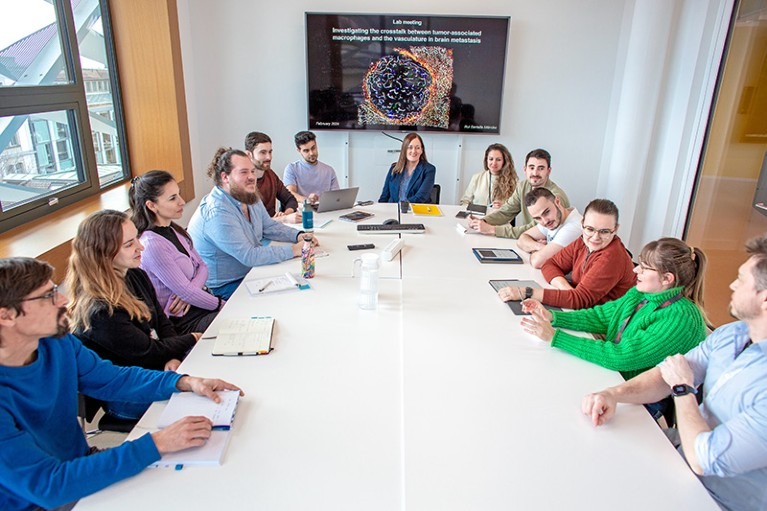
Modern science thrives on collaboration. Large research projects frequently involve multinational teams, shared data systems, and cross-institution partnerships.
Unfortunately, researchers in developing countries often face barriers entering these networks.
Major obstacles include:
- limited conference travel funding
- visa restrictions
- lack of institutional partnerships
- reduced visibility in global citation networks
The World Health Organization has repeatedly emphasized the importance of global collaboration in advancing healthcare research.
However, participation requires strong communication channels and institutional outreach. Partnerships with organizations such as a communications research centre can help researchers improve visibility and disseminate their work internationally.
Without these networks, scientific innovation remains geographically concentrated.
Key Structural Barriers in Research
| Challenge Area | Impact on Researchers | Long-Term Consequence |
| Limited Funding | Restricted lab equipment and research grants | Slower scientific progress |
| Publishing Barriers | Difficulty entering international journals | Lower research visibility |
| Clinical Trial Recruitment | Delayed patient enrollment | Extended research timelines |
| Literature Access | Limited access to journals and databases | Weak literature reviews |
| Operational Constraints | Overburdened healthcare systems | Reduced research productivity |
| Collaboration Gaps | Fewer international partnerships | Isolation from global research networks |
These barriers often reinforce each other, creating a cycle that makes it harder for researchers to compete globally.
Strengthening Research Ecosystems
Despite these obstacles, researchers in developing countries continue to contribute valuable knowledge — particularly in public health, epidemiology, and community medicine.
Addressing the challenges for researchers requires systemic changes.
Key solutions include:
Increase national research funding
Governments must treat scientific research as a strategic investment.
Improve scientific writing training
Universities should integrate manuscript development programs into postgraduate education.
Expand international collaboration programs
Cross-border research partnerships accelerate knowledge sharing.
Promote open-access publishing models
Reducing paywalls democratizes access to scientific knowledge.
Encourage editorial preparation before submission
Professional editing platforms help researchers refine manuscripts and align with journal requirements.
Scientific discovery should not depend on geography. When researchers worldwide have equal access to resources, collaboration, and publishing opportunities, the entire global knowledge system becomes stronger.