


Let’s drop the illusion early: your research portfolio is not reviewed in isolation. It is always, directly or indirectly, compared against others. Editors, reviewers, hiring panels—they don’t evaluate you in a vacuum. They stack you against competitors and decide whether you’re worth the space, funding, or publication slot.
That’s the uncomfortable truth behind Research Portfolio vs Competitors.
And if you’re not actively measuring up, you’re already falling behind.
The Myth of “Good Enough” in a Research Portfolio
Most researchers assume that having a few publications, a clean CV, and a decent narrative is sufficient. It’s not.
A strong research portfolio is not about volume—it’s about positioning.
Editors today are under pressure to prioritize:
- High-impact research
- Translational relevance
- Ethical clarity
- Methodological rigor
Review these guides for further clarity:
- How to Write and Publish Your Paper in High-Impact Journals
- Translational Research: Why It Is Dominating Modern Journals
- Ethical Challenges in Multi-Center Research
- Most Common Mistakes in Research Methodology Sections (And How to Avoid Them)
According to the National Institutes of Health, research evaluation is increasingly shifting toward impact, transparency, and reproducibility—not just the number of publications.
If your portfolio doesn’t clearly signal value in these dimensions, it gets filtered out—fast.
There is no polite rejection here.
It’s a silent exclusion.
And here’s what most people miss: you’re not competing against average portfolios—you’re competing against optimized ones.
What Your Competitors Are Doing (That You’re Not)
Your competitors are not necessarily smarter. But many are more strategic.
They understand competitor intelligence in academia and apply it consistently:
- They analyze published work in their niche
- They track trending methodologies
- They align their research topics with funding priorities
- They optimize visibility through structured portfolios
To find competitors in your domain, you should already be:
- Scanning top journals weekly
- Monitoring citation networks
- Reviewing grant-funded research summaries
- Tracking keynote speakers and recurring authors
A useful starting point is PubMed, where you can reverse-engineer what gets published, cited, and promoted.
Meanwhile, many researchers still operate reactively—submitting what they’ve already done instead of strategically building what journals want.
That gap—between reactive and strategic—is where most careers stall.
The Real Benchmark: Comparative Value
Here’s the harsh filter used by editors:
“Why should we accept this over similar submissions?”
This is where most portfolios collapse.
Your work must demonstrate:
- Novelty (not repetition)
- Relevance (not theoretical isolation)
- Clarity (not overcomplicated jargon)
- Applicability (not just conceptual depth)
A comparative mindset means your portfolio should answer:
- How is this better than existing work?
- What gap does it fill?
- Why now?
- Who benefits from this?
Without these answers, your research becomes invisible—even if it’s technically strong.
Using Competitor Intelligence to Upgrade Your Portfolio
Academic growth today requires a shift from passive writing to active positioning.
Competitor intelligence is not unethical—it’s essential.
Here’s how to apply it with precision:
1. Reverse-Engineer Accepted Papers
Study recently published articles in your target journals:
- Abstract structure
- Data presentation style
- Depth of literature review
- Clarity of conclusions
Wikipedia’s overview of academic publishing shows how editorial standards are increasingly focused on transparency, replication, and structured reporting.
2. Identify Pattern Gaps
Look for:
- Underrepresented populations
- Weak statistical approaches in existing studies
- Lack of interdisciplinary integration
These gaps are not weaknesses—they are opportunities waiting to be claimed.
3. Align With Funding Trends
Funding bodies quietly dictate research direction.
Reports from organizations like the World Health Organization emphasize priority areas such as:
- Global health equity
- Digital health innovation
- Climate-related health risks
- Pandemic preparedness
If your portfolio ignores these directions, it risks becoming academically correct but strategically irrelevant.
Tools That Give You an Edge
Manual tracking is outdated. Serious researchers are using the best cloud-based platforms for portfolio research to stay competitive and visible.
These tools help you:
- Organize research outputs
- Track citations and h-index
- Build structured digital identities
- Compare your work against peers
Key platforms include:
- ORCID (persistent researcher identity)
- ResearchGate (network visibility)
- Google Scholar Profiles (citation tracking)
But tools alone don’t create advantage—how you use them does.
Structuring your portfolio with clarity and editorial precision can significantly improve how reviewers perceive your work.
Because perception is the gateway to acceptance.
UX Research Portfolio Example: Why Presentation Matters
Even in traditional academic publishing, presentation is no longer optional—it’s strategic.
A strong UX research portfolio example teaches one critical lesson:
Clarity beats complexity every time.
Your portfolio should:
- Tell a coherent story
- Show intellectual progression
- Highlight measurable outcomes
- Connect research to real-world impact
Instead of writing:
“Conducted multiple studies in cardiology.”
Frame it as:
“Designed and executed multi-phase cardiology studies improving diagnostic accuracy through evidence-based clinical frameworks.”
Same work. Completely different impact.
If you’re struggling to achieve this level of clarity, structured support from Paperedit's service page can help transform raw research into a compelling academic narrative.
The “Find Competitor List” Approach
You cannot compete blindly. You need a system.
Adopt a find competitor list_top client tab mindset:
- Identify the top 10–15 researchers in your niche
- Track their publication frequency
- Analyze their journal selection strategy
- Study their collaboration networks
- Observe their citation growth patterns
Then ask:
- Are they publishing more strategically?
- Are they targeting higher-impact journals?
- Are they co-authoring with influential researchers?
This is not imitation—it’s calibration.
And without calibration, your portfolio drifts.
Internal Weaknesses You’re Ignoring
Let’s be straight.
Most portfolios fail due to internal flaws, rather than external competition.
Common issues include:
- Poor editing and grammar
Lack of thematic consistency
- Weak abstracts and introductions
- Overloaded methodology sections
- Inconsistent formatting
A poorly edited paper signals:
- Lack of attention to detail
- Weak communication skills
- Low readiness for publication
That’s why refining your work through platforms like Paperedit's proofreading services is not optional—it’s a competitive necessity.
Because in academia, clarity is credibility.
The Role of Ethical Positioning
In a competitive environment, shortcuts can seem tempting—but they are career-ending.
Ethical research practices are non-negotiable.
According to the Office of Research Integrity, the most common violations include:
- Fabrication
- Falsification
- Plagiarism
But there’s a subtler layer most researchers overlook:
- Selective reporting
- Incomplete data transparency
- Citation manipulation
Your portfolio must reflect:
- Honest reporting
- Proper attribution
- Ethical approvals
- Data transparency
Anything less is not just weak—it’s dangerous.
Because reputation, once damaged, is nearly impossible to rebuild in academic circles.
From Static Portfolio to Competitive Asset
A modern research portfolio is not a static document—it’s a dynamic system.
To stay competitive, you must:
- Update your portfolio regularly
- Align with emerging research trends
- Continuously refine presentation
- Benchmark against competitors
Think of your portfolio as a living product, not a finished file.
Regularly ask:
- Does this reflect current research priorities?
- Is my impact clearly visible?
- Am I communicating value effectively?
For ongoing refinement strategies, insights from Paperedit's blogs can help you stay aligned with evolving academic standards.
The Hidden Advantage: Strategic Narrative Building
Here’s what separates average researchers from standout ones: narrative control.
Top competitors don’t just present research—they craft a story around it.
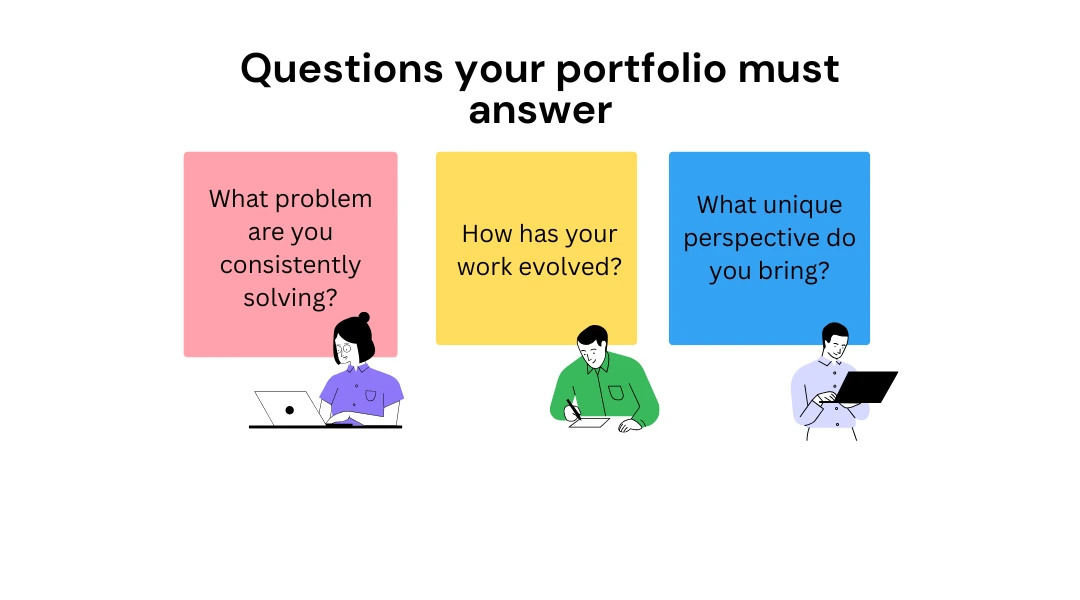
Your portfolio should answer:
- What problem are you consistently solving?
- How has your work evolved?
- What unique perspective do you bring?
A fragmented portfolio confuses reviewers.
A cohesive narrative convinces them.
This is where many researchers lose—not because their work is weak, but because their story is unclear.
Visibility vs Value: Why Both Matter
You can have excellent research and remain invisible.
That’s the paradox.
Your portfolio must balance:
- Value (quality of research)
- Visibility (how easily it is found and understood)
To improve visibility:
- Use consistent keywords across publications
- Maintain updated profiles on academic platforms
- Ensure abstracts are clear and searchable
To improve value:
- Focus on real-world applicability
- Strengthen methodology
- Prioritize clarity over complexity
Without visibility, value is wasted.
Without value, visibility is meaningless.
Final Reality Check
Here’s the truth most people avoid:
Your research is not competing on effort.
It’s competing on perceived value.
And perception is shaped by:
- Clarity
- Relevance
- Positioning
- Comparison
If your portfolio doesn’t outperform—or at least match—your competitors in these areas, it won’t matter how hard you worked.
Because in academia, fairness is secondary to selection.
And selection is always comparative.