


Many researchers believe publication decisions depend only on data quality. That belief is incomplete. Strong data matters, but journals do not publish data alone—they publish manuscripts shaped by editorial priorities, audience needs, ethical expectations, and communication standards. This is why the same paper can be desk rejected by one journal, sent to major revision by another, and accepted by a third after modest changes.
The truth is simple: Editorial Standards in academic Journals are not identical. They vary by discipline, publisher, region, reputation level, indexing goals, readership, and editorial philosophy. Authors who ignore that reality waste months in avoidable rejection cycles.
Too many submissions fail because researchers assume every journal wants the same structure, tone, evidence threshold, and presentation style. That assumption is costly. Smart publishing is not only about writing a paper—it is about aligning the paper with the right editorial environment.
For authors who want faster, cleaner outcomes, understanding these standards is essential.
What Is an Academic Journal and Why Do Editorial Standards Exist
Before comparing standards, define the system clearly. What is an academic journal? It is a scholarly publication that evaluates research manuscripts through editorial screening and peer review before deciding whether to publish them.
According to the Wikipedia overview of academic journals, journals function as formal channels for distributing validated knowledge. But “validated” does not look the same everywhere.
Some journals prioritize:
- Novel discoveries
- Clinical relevance
- Statistical rigor
- Replication studies
- Policy impact
- Regional relevance
- Theoretical contribution
- Methodological innovation
That is exactly why editorial standards exist. Editors need filters. Without standards, journals become random archives rather than curated sources of trust.
Authors who prepare strategically through PaperEdit often perform better because they treat publishing as a standards-driven process, not a luck-based event.
Why One Good Study Can Receive Three Different Decisions
Researchers often feel confused when one paper receives different outcomes across journals. But those outcomes usually reflect different editorial criteria.
Consider a manuscript on hospital discharge practices:
- A clinical journal may ask for patient outcome relevance
- A policy journal may ask for system-level implications
- A nursing journal may ask for the implementation's practicality
- A statistics journal may challenge model assumptions
- A broad medical journal may reject for limited novelty
Same dataset. Same results. Different standards.
This is not unfair. It is an editorial selection.
Journals are not grading papers like teachers. They are selecting content for a specific audience. Once authors understand that shift, rejection becomes more interpretable.
Core Areas Where Editorial Standards in Academic Journals Differ
Below is a practical overview of where standards most commonly vary.
| Editorial Area | What Some Journals Prioritize | What Others Prioritize | Why It Matters |
| Scope | Narrow specialty fit | Broad interdisciplinary appeal | Scope mismatch causes desk rejection |
| Novelty | First-of-its-kind findings | Useful confirmations | Impacts acceptance odds |
| Methods | Advanced statistics | Practical applicability | Determines reviewer enthusiasm |
| Writing Style | Technical precision | Readability and accessibility | Affects editorial confidence |
| Ethics | Strong documentation | Transparent declarations | Missing files can delay decisions |
| Figures/Tables | Dense technical detail | Clean visual communication | Reviewer fatigue matters |
| References | Foundational literature | Recent citation relevance | Signals field awareness |
| Audience Value | Specialists only | Clinicians, policymakers, educators | Shapes editorial interest |
This table explains why copying one submission format into multiple journals often results in failure.
Scope Standards: The First Gate Most Authors Underestimate
Scope is one of the most aggressive filters in the publishing industry. Editors frequently reject papers before peer review because the manuscript does not fit the journal’s mission.
Examples:
- A local school survey was sent to a global psychiatry journal
- A narrow operations model sent to broad management academic journals
- A pilot lab study was sent to a high-impact translational title
- A descriptive case series sent to a methods-focused journal
Authors often misread scope pages because they focus on keywords, not actual content patterns.
A journal may say it welcomes “clinical innovation,” but recent issues may reveal a preference for multicenter studies, randomized trials, or systematic reviews.
That is why reviewing the last 12 months of published papers matters more than reading marketing language. Learn more with the guide "How to Analyze Previously Published Papers to Pick Your Journal."
You can reduce mismatch risk using journal selection support before submission.
Editorial Standards Writing Guidelines Are Strategic, Not Cosmetic
Many authors dismiss formatting rules as superficial. That is a mistake. Editorial standards writing guidelines often serve as proxies for professionalism, discipline, and readiness.
Editors may immediately assess:
- Word count compliance
- Structured abstract quality
- Proper heading hierarchy
- Reference style accuracy
- Figure captions completeness
- Conflict of interest disclosures
- Funding acknowledgments
- Reporting checklist inclusion
The ICMJE Recommendations strongly influence biomedical journal practices, especially around authorship, disclosures, manuscript structure, and ethical reporting.
When authors ignore instructions, editors notice two things:
- The manuscript may be recycled from another journal
- The authors may be careless with details elsewhere.
- That second perception is dangerous.
Professional cleanup through manuscript editing services can help remove avoidable friction before editors ever see the file.
The Hidden Influence of Editorial Teams
Many researchers imagine one powerful editor making all decisions.
In reality, multiple people shape manuscript outcomes.
Common roles include:
- Editor-in-chief
- Managing editor
- Associate editor
- Section editor
- Statistical reviewer
- Peer reviewers
- Production editor
- Editorial assistant
An editorial assistant may not decide acceptance, but can still influence workflow by flagging incomplete files, metadata errors, missing declarations, image problems, or formatting failures.
Submission systems like editorial manager platforms streamline processing, but software does not eliminate human judgment.
Different journals organize authority differently:
- Some centralized decisions at the top
- Some empower associate editors heavily
- Some rely strongly on reviewer votes
- Some emphasize internal editorial screening first
Knowing this helps authors interpret silence, revision requests, and decision speed.
Ethics Standards Are Increasingly Strict—and Uneven
Ethics expectations have risen across scholarly publishing, but enforcement varies by field.
Common editorial checks include:
- Human subject approval
- Animal research approval
- Informed consent statements
- Trial registration
- AI assistance disclosure
- Data availability statements
- Image integrity screening
- Authorship legitimacy
The Committee on Publication Ethics (COPE) provides widely used frameworks for editors handling misconduct, disputes, corrections, and retractions.
But journals apply ethics differently.
Examples:
- Clinical journals may focus heavily on trial registration
- Imaging journals may prioritize figure manipulation detection
- Social science journals may stress privacy safeguards
- Genetics journals may scrutinize consent language
- Education journals may focus on vulnerable populations
A quantitative academic journal about at-risk youth at school may demand especially careful consent procedures, school approvals, and data confidentiality language.
Authors should never wait until the reviewer comments to solve ethics gaps. By then, trust is already weakened.
Novelty Standards: “Interesting” Means Different Things
Many authors hear that their paper “lacks novelty” and assume the research is weak. Not always.
Novelty is editorial context-dependent.
Some journals define novelty as:
- First report globally
- New mechanism discovered
- New method introduced
- First replication in the new population
- Policy relevance at scale
- Contradiction of established assumptions
Other journals happily publish confirmatory or incremental findings if the methodology is strong.
That means authors should stop asking, “Is my paper novel?” and instead ask, “Novel for which journal?”
This single mindset shift saves time.
Review this guide: How to Highlight Novelty and Impact in a Research Cover Letter?
Writing Tone: Professional vs Editorialization
Research writing should be persuasive through evidence, not emotion. Many journals reject manuscripts that drift into editorialization.
Problem phrases include:
- “This groundbreaking study changes everything.”
- “Our superior method proves all previous work wrong.”
- “The healthcare system has clearly failed.”
These statements often overreach.
Editors prefer restrained, evidence-based claims such as:
- “Results suggest potential improvement under defined conditions.”
- “Findings differ from prior studies and warrant replication.”
- “Observed associations may inform future policy discussion.”
Do not confuse research articles with samples of editorials, commentary pieces, or opinion essays. Those genres permit a stronger voice.
If your tone feels inflated or defensive, neutral language polishing through proofreading support can restore credibility.
Take your manuscript to the level of acceptance with Paperedit's proofreading services.
Editorial Design Standards Matter More Than Researchers Admit
Strong evidence presented badly still struggles.
Editorial design includes how your content looks and flows:
- Readable tables
- Clear axis labels
- Consistent terminology
- Logical heading structure
- White space balance
- Figure resolution quality
- Supplementary file organization
Reviewers are busy. Editors are overloaded. If your manuscript creates unnecessary friction, attention declines.
Poor presentation signals a weak care culture.
Good design does not mean flashy colors or decorative graphics. It means clarity under pressure.
Authors can improve structure and readability through academic editing workflows before submission.'
Get your manuscript edited with Paperedit formatting services.
Standards in High-Impact vs Emerging Journals
Not all journals compete the same way. Therefore, standards differ by market position.
High-Impact Journals Often Emphasize:
- Broad relevance
- Strong novelty
- Clean storytelling
- Robust methods
- Media or policy interest
- Fast reviewer confidence
Mid-Tier Journals Often Emphasize:
- Sound methodology
- Practical contribution
- Reliable reporting
- Field relevance
New or Emerging Journals Often Emphasize:
- Submission growth
- Topic expansion
- Timely review cycles
- Author experience
This does not mean lower standards automatically. It means strategic priorities differ.
Discipline Differences Authors Must Respect
A common mistake is cross-disciplinary formatting without adaptation.
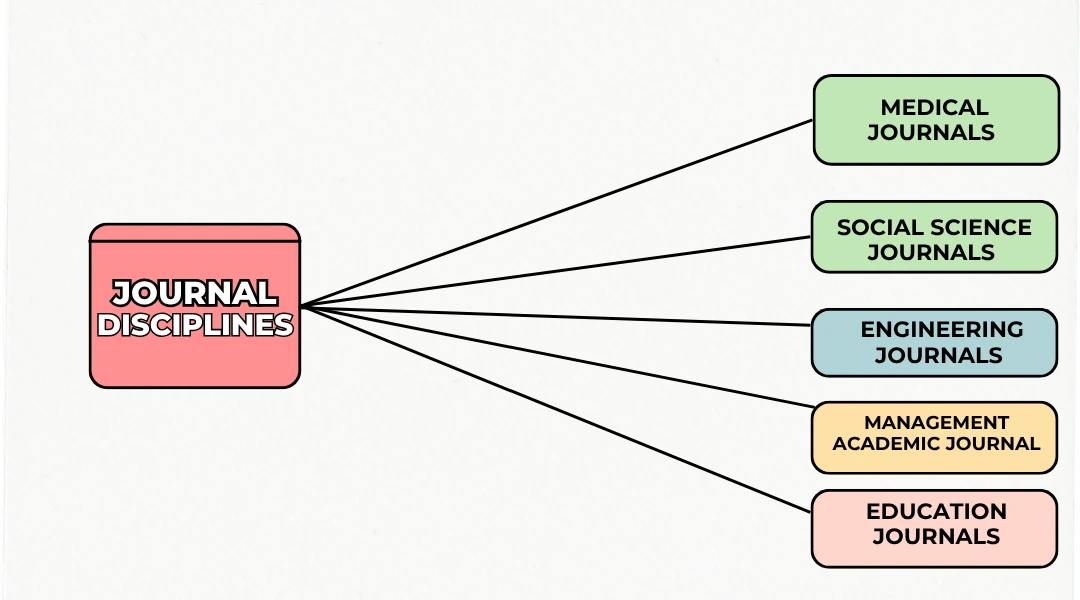
Examples:
Medical Journals
- CONSORT, STROBE, PRISMA expectations
- Strong ethics language
- Outcome relevance
Social Science Journals
- Theory framing
- Sampling logic
- Context interpretation
Engineering Journals
- Reproducibility
- Performance benchmarks
- Technical precision
Management Academic Journals
- Theory contribution
- Practical implications
- Model justification
Education Journals
- Equity framing
- Institutional context
- Learner outcomes
Each field has unwritten expectations beyond author guidelines.
What Is the Editorial Page Mindset?
Some authors ask what the editorial page is because journals often publish editorials beside research content.
Editorial pages typically reflect leadership voice, debate, or issue framing. Research editors bring a similar curatorial mindset to manuscript decisions.
They ask:
- Does this paper belong in our conversation?
- Will readers care now?
- Is it trustworthy enough to defend publicly?
- Does it strengthen the journal's identity?
Acceptance is not only technical approval. It is content curation.
That is why a statistically solid paper can still be rejected.
Practical Checklist Before Submission
Use this pre-submission filter:
| Question | If “No,” Fix Before Submission |
| Does the journal publish similar studies? | Reconsider target |
| Are all author guidelines followed? | Reformat immediately |
| Is the abstract sharp and clear? | Rewrite |
| Are ethics declarations complete? | Add documentation |
| Athe rthe e figures readable in grayscale/PDF? | Redesign |
| Are claims proportional to data? | Tone down |
| Are references current and relevant? | Update citations |
| Is the language publication-ready? | Edit professionally |
This checklist alone can prevent many desk rejections.
Why Smart Authors Use Pre-Submission Support
Researchers are experts in science, not always in publishing systems. Those are different skill sets.
External support can help with:
- Journal matching
- Language editing
- Reference cleanup
- Cover letter refinement
- Figure review
- Compliance checks
Using editorial preparation services is not a weakness. It is workflow efficiency.
The best researchers delegate what is not their core expertise.
Future Trends in Editorial Standards
Expect journals to become stricter in these areas:
- AI disclosure transparency
- Data sharing expectations
- Reproducibility evidence
- Reporting guideline enforcement
- Citation integrity
- Reviewer efficiency metrics
- Image forensics screening
The U.S. National Institutes of Health and other major institutions continue pushing rigor and transparent culture, influencing editorial policies globally.
Authors who adapt now will outperform slower competitors.
Final Takeaway
There is no universal publication formula. There are only journal-specific expectations shaped by mission, audience, ethics, prestige, discipline, and editorial culture.
That is why Editorial Standards in academic Journals differ across journals.
Good science is the foundation. But acceptance usually depends on something more practical: whether your manuscript speaks the language of the journal you chose.
Researchers who understand that truth stop wasting submissions, shorten decision cycles, and publish with more control.