


If you’re treating the Scopus-indexed journals list as static, you’re already behind. Scopus is a dynamic database, not a fixed directory. Journals are constantly reviewed, added, reclassified, or removed. Hence, understanding how often updates happen—and why—is critical for any researcher who wants to publish strategically and protect the impact of their work.
This isn’t just academic trivia. Instead, it directly affects where you submit, how your work is evaluated, and whether your publications are recognized in real metrics, such as Scopus-indexed journals and the Scopus h-index.
Scopus Is Continuously Evolving
Many researchers think of Scopus as a static “official list,” but it’s not. Updates occur throughout the year, triggered by factors such as editorial quality, ethical compliance, and relevance to research fields.
Hence, Journals can:
- Enter the database after rigorous evaluation
- Be discontinued due to ethical or quality concerns
- Shift categories under Scopus journal classification
- Improve or decline in metrics like scopus indexed journals, scopus h index
These updates are managed by the Content Selection & Advisory Board (CSAB), an independent panel of subject experts. According to Elsevier’s Scopus Content Policy, journals are reviewed based on strict quality benchmarks—not popularity.
How Often Are Updates Made? A Clear Overview
The Scopus list isn’t released in fixed intervals.
Instead, updates occur at different levels: daily, monthly, quarterly, and annually. Here’s a table to make sense of it:
| Update Type | Frequency | What Changes | Impact for Researchers |
| Daily Database Updates | Daily | Article indexing, citation counts, and author profiles | Keeps your citations and profiles current; requires monitoring via Scopus author search |
| Rolling Journal Inclusion | Throughout the year | New journals added once approved | Allows real-time targeting of newly indexed journals |
| Quarterly Metrics Updates | Every 3 months (approx.) | CiteScore recalculations, ranking adjustments | Affects journal selection strategy and perceived impact |
| Annual Deep Review | Once a year | Full evaluation, potential discontinuation, reclassification | Ensures ethical compliance; journals may be removed if standards are not met |
| Trigger-Based Changes | Any time | Ethical violations, editorial decline, publication irregularities, citation manipulation | May directly affect whether your submitted paper will be in an indexed journal |
What Triggers Scopus Updates?
Updates aren’t random—they’re driven by strict evaluation criteria.
Common triggers include:
- Decline in editorial quality
- Fake or weak peer review processes
- Publication irregularities
- Citation manipulation or self-citation inflation
- Ethical violations
Ethical benchmarks are often guided by organizations like the Committee on Publication Ethics (COPE). Even established journals aren’t immune—indexing is earned continuously, not guaranteed permanently.
Understanding Scopus Journal Classification Changes
Even if a journal remains indexed, it can shift categories under Scopus journal classification. And, this impacts:
- Visibility within your field
- Competitive positioning
- Citation and impact metrics
A journal moving from a broad category to a niche field may improve relevance but reduce discoverability. These reclassifications typically occur during annual reviews, but can happen any time based on editorial focus.
Leveraging Scopus Author Search
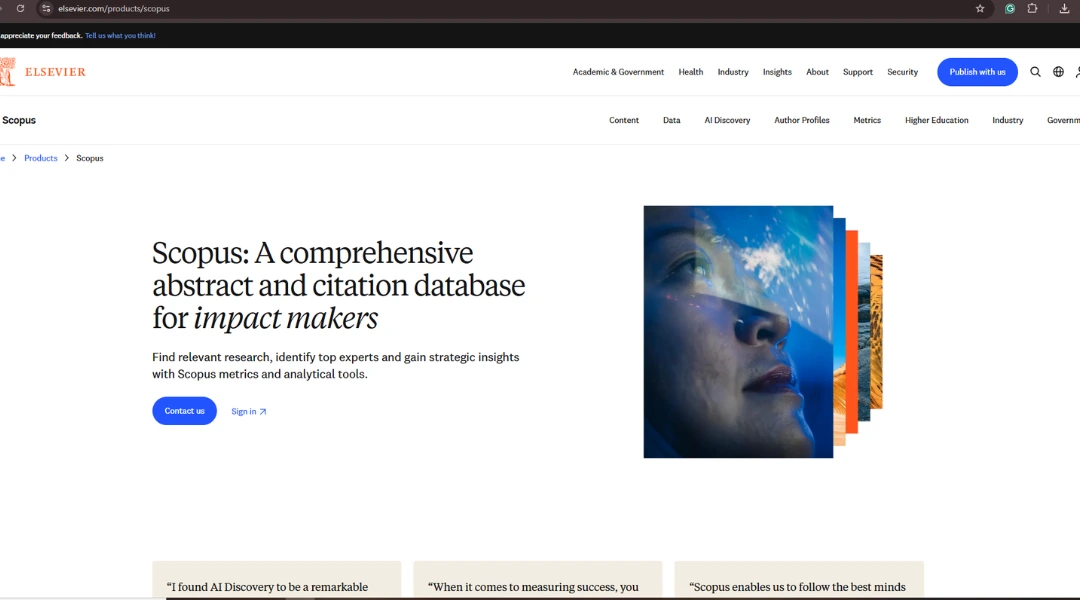
Tracking your own publications and metrics is just as important as tracking journals. Therefore, tools like Scopus Author Search and AI-driven platforms (Scopus AI, Scopus Author and Scopus Search by Author) allow you to:
- Monitor citation trends
- Verify the indexing status of journals
- Track co-author networks and collaborations
Your Scopus ID (what is Scopus ID) is your academic fingerprint. Therefore, keeping it up-to-date ensures your research is properly credited.
Impact on Your Publishing Strategy
Ignoring Scopus updates is risky. Common pitfalls include:
- Submitting to journals that get discontinued mid-review
- Using outdated scopus indexed journals, scopus h index metrics
- Targeting journals no longer aligned with your field
- Losing visibility due to reclassification
Treat Scopus as real-time intelligence, not a static checklist.
How to Verify a Journal’s Indexing Status
To avoid mistakes, verify indexing every time:
- Confirm metrics on SCImago Journal Rank (SJR)
- Cross-check with DOAJ
- Review the discontinued journals updates
Wikipedia provides background, but official Scopus tools are mandatory for decision-making.
Common Mistakes Researchers Make
- Trusting static lists – PDF lists or blogs go stale fast.
- Ignoring discontinued journals – Some journals continue accepting submissions even after removal from Scopus.
- Misunderstanding metrics – A high H-index doesn’t guarantee current indexing.
- Neglecting author profile management – Missing or split profiles reduce visibility.
PaperEdit’s Strategy to Stay Updated
PaperEdit recommends:
- Verifying indexing within 7–14 days before submission
- Tracking journal performance trends
- Monitoring your profile via Scopus author search
- Maintaining consistency in what the Scopus ID is
For deeper guidance:
- How to Write and Publish Your Paper in High-Impact Journals
- How to Check If a Journal is Scopus Indexed and Why It Matters
- Research Cover Letter Checklist
- How to Find Free Scopus-Indexed Journals
The Future: AI and Real-Time Indexing Intelligence
AI integration in Scopus means the concept of a static “journal list” is becoming obsolete. Researchers will increasingly rely on:
- Predictive citation analysis (Explore more in When to Use ‘et al.’ in Citations and How to Format It Correctly)
- Automated research mapping
- Smart journal recommendations
Ignoring real-time tools today is like publishing blind.
Conclusion
Therefore, there’s no fixed schedule for Scopus-indexed journals list updates—the system is continuously evolving.
- Daily data updates
- Rolling inclusion of new journals
- Periodic metric recalculations
- Annual deep evaluations
If you rely on outdated lists, your research risks misplacement or reduced impact. Real-time verification and strategic monitoring are essential for survival in modern academic publishing.