


There’s an uncomfortable truth most researchers avoid: your ideas might be solid, your data might be valid, but if your research writing is weak, none of it survives peer review.
This isn’t about grammar alone. It’s about clarity, structure, logic, and how effectively you communicate your thinking. In academia, writing is not a secondary skill—it is the delivery system of your research.
If that system fails, your work fails with it.
Let’s break down exactly where researchers go wrong—and how to fix it without compromising academic integrity.
What Is a Research Problem—and Why Most People Get It Wrong
Before anything else, you need to understand what a research problem is. It’s not just a vague idea or a topic you’re interested in. It’s a precise gap in existing knowledge that your study aims to address.
According to the World Health Organization’s research guidance, a strong research problem should be:
- Clearly defined
- Evidence-based
- Relevant to a real-world issue
- Feasible within your resources
Yet most researchers write problem statements that are either too broad or painfully generic.
A weak version sounds like this:
“Healthcare systems need improvement.”
A strong version looks like this:
“Limited access to telemedicine in rural populations leads to delayed diagnosis and increased morbidity rates.”
That shift—from vague to specific—is where real research writing begins.
But here’s the deeper issue: most researchers confuse topic selection with problem identification. A topic is broad—like “mental health in students.” A research problem isolates a measurable issue within that topic, such as the lack of institutional support systems contributing to rising anxiety levels.
Without that distinction, your entire paper becomes directionless.
The Anatomy of a Strong Problem Statement in Research
A problem statement in research is not just a paragraph—it’s your paper’s foundation. If it’s unclear, everything built on top collapses.
To understand what works, look at a real statement of a problem in research example formats.
A strong problem statement includes:
- Context: What’s happening right now?
- Gap: What’s missing in current research?
- Impact: Why does it matter?
- Objective: What will your study do about it?
For example:
Despite advancements in digital healthcare, rural populations in South Asia experience limited access to telemedicine services, resulting in delayed diagnosis and increased disease burden. This study aims to evaluate barriers to telemedicine adoption and propose scalable interventions.
Notice how every sentence does work. No fluff. No filler.
If you need structured guidance, reviewing sample research problem statement examples can help you identify patterns in high-quality academic writing.
For deeper conceptual clarity, Wikipedia’s entry on problem statements outlines how structured problem definitions drive effective research design.
A critical mistake to avoid: writing your problem statement after completing your research. That reverses the logic. Your research should exist to solve the problem—not the other way around.
Why Good Research Gets Rejected: The Writing Gap
Let’s be clear: journals don’t reject ideas—they reject unclear writing.
Editors and reviewers are not there to interpret your intentions.
If your argument is buried under:
- Poor structure
- Overly complex sentences
- Weak transitions
- Inconsistent terminology
…it gets rejected.
A report from Nature highlights that poor communication is one of the most common reasons manuscripts fail peer review.
And here’s the harsh reality: reviewers often decide within minutes whether your paper is worth reading in full.
That decision is based on:
- Title clarity
- Abstract strength
- Logical flow in the introduction
If those fail, the rest of your paper doesn’t even get a fair chance.
Learn more with the guide: The 30-Second Rule.
This is where research writing becomes a professional skill—not just an academic requirement.
And this is also why many researchers quietly turn to professional support like Paperedit when preparing submissions.
Because clarity is not optional—it’s expected.
Writing a Research Paper Outline: Your Non-Negotiable Blueprint
If you’re skipping outlines, you’re setting yourself up for chaos.
Writing a research paper outline is not busywork—it’s strategic planning. It forces you to organize your thoughts before you start writing.
A solid outline typically includes:
- Introduction
- Literature Review
- Methodology
- Results
- Discussion
- Conclusion
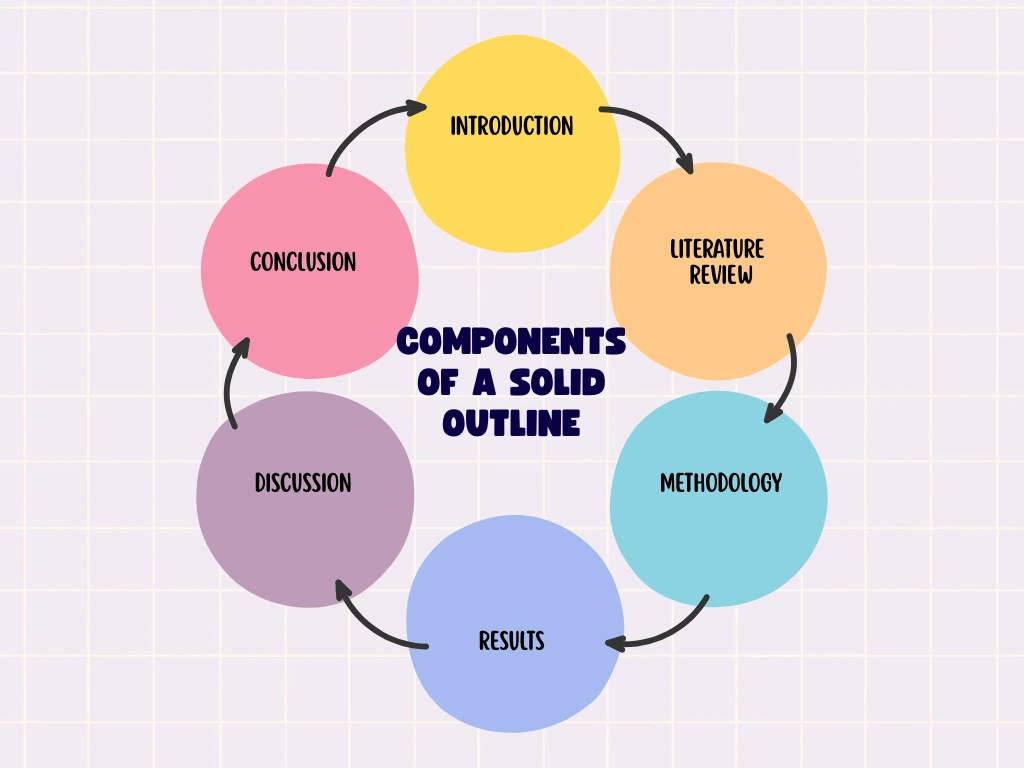
But structure alone isn’t enough. Each section needs a clear purpose.
For example:
- Introduction: Define the problem and research gap
- Literature Review: Show what’s already known
- Methodology: Justify your approach
- Results: Present findings objectively
- Discussion: Interpret your findings—not repeat them
The Purdue Online Writing Lab is a reliable academic resource that emphasizes structured outlines as a core writing practice.
Here’s the strategic advantage of outlining: it exposes weak arguments early.
Explore more with: Weak Arguments in Academic Papers (And How to Fix Them).
If your outline doesn’t flow logically, your final paper won’t either.
Also, review the guide, How to Improve Logical Flow in Research Papers for clarity.
Without an outline, your paper becomes reactive instead of intentional.
Writing Discussion in Research Paper: Where Most Authors Fail
The discussion section is where your research proves its value. And it’s where most researchers lose control.
Writing discussions in research paper sections often go wrong because authors:
- Repeat results instead of interpreting them
- Avoid critical analysis
- Fail to connect findings to existing literature
- Ignore limitations
Your discussion should answer three questions:
- What do the results mean?
- How do they compare with previous studies?
- What are the implications?
For example:
Weak discussion:
“The results showed an increase in patient engagement.”
Strong discussion:
“The increase in patient engagement suggests that mobile health interventions can effectively reduce barriers to healthcare access, aligning with previous findings in digital health research.”
But let’s go deeper.
A strong discussion also acknowledges limitations:
“While the findings indicate improved engagement, the study’s limited sample size may affect generalizability.”
This doesn’t weaken your paper—it strengthens credibility.
Academic writing values transparency over perfection.
If your discussion doesn’t add insight, your research feels incomplete.
Clarity Over Complexity: The Biggest Writing Shift You Need
Many researchers believe complex writing signals intelligence.
It doesn’t.
It signals poor communication.
Clear writing wins.
That means:
- Shorter sentences
- Direct arguments
- Simple vocabulary where possible
- Logical transitions
For example:
Overwritten:
“It is evident that the implementation of technological interventions has the potential to significantly enhance the accessibility of healthcare services.”
Clear:
“Technology can improve access to healthcare.”
Same idea. Better impact.
Organizations like the National Institutes of Health emphasize clarity as a core principle in scientific communication.
If your reader has to re-read your sentence, you’ve already lost them.
Research Writing Jobs: Why This Skill Pays Off
Here’s something most students don’t realize: strong writing isn’t just for publishing papers—it’s a career asset.
There’s growing demand for professionals in:
- Academic editing
- Medical writing
- Policy research
- Content strategy
- Technical documentation
These are all jobs involving research and writing, and they pay well because they require precision and clarity. In fact, research writing jobs are expanding globally, especially in fields like healthcare, technology, and public policy.
Strong writers are often the ones who move faster in their careers—not because they know more, but because they communicate better.
Why Editing Is Not Optional—It’s Strategic
Editing is where your research transforms from “acceptable” to “publishable.”
But editing is not just proofreading.
It includes:
- Structural refinement
- Logical flow improvement
- Clarity enhancement
- Tone consistency
This is why many researchers rely on professional services like Paperedit's proofreading service and Paperedit's formatting services to refine their manuscripts before submission.
Because self-editing has limits—you’re too close to your own work to see its flaws clearly.
Even experienced researchers use external editors. Not because they can’t write—but because they understand the value of perspective.
The Hidden Cost of Poor Research Writing
Weak writing doesn’t just lead to rejection. It creates long-term academic setbacks.
Here’s what poor writing actually costs you:
- Delayed publication timelines
- Reduced credibility with reviewers
- Missed funding opportunities
- Lower citation impact
According to analysis from scientific publishing trends reported by Nature, clarity and readability significantly influence how research is received and cited.
So when you ignore writing quality, you’re not just risking one paper—you’re limiting your entire research visibility.
The Real Fix: Write Like a Researcher, Not a Student
Here’s the shift you need to make:
Stop writing to complete an assignment.
Start writing to communicate knowledge.
That means:
- Prioritizing clarity over complexity
- Using precise, direct language
- Structuring arguments logically
- Backing every claim with evidence
If you’re struggling to meet publication standards, resources like How to Create a Research Portfolio to Boost Your Career and Research Portfolio Mistakes That Quietly Kill Your Credibility can help you identify and fix recurring issues.
Final Take: Your Writing Is Your Research
Your research is not just your data.
It’s how you present, explain, and defend that data.
Weak writing doesn’t just hide your ideas—it discredits them.
Strong research writing doesn’t just improve readability—it builds credibility.
So if your papers keep getting rejected, don’t immediately question your research.
Question your writing.
Because more often than not, that’s where the real problem is.