


If you think your paper got rejected because it “wasn’t good enough,” pause. That’s rarely the full story. The Journal Rejection Rate isn’t just a measure of quality—it’s a filter shaped by competition, scope, timing, and editorial strategy.
Here’s the reality: top journals reject 70–95% of submissions. That’s not failure. That’s the system.
If you want to publish consistently, you don’t fight the system—you understand it, then position yourself inside it.
What Is Journal Rejection Rate (Really)?
The Journal Rejection Rate is the percentage of submitted manuscripts that a journal declines.
Simple definition—but complex implications.
It reflects:
- Editorial priorities
- Reviewer expectations
- Journal prestige and indexing
- Volume vs capacity
Journals indexed in platforms like PubMed or Scopus receive thousands of submissions monthly. They don’t just pick “good research”—they pick the most relevant, timely, and impactful research.
That’s why even solid papers get rejected.
Key insight:
Rejection is not always about quality—it’s about fit + positioning + clarity.
Why Journal Rejection Rates Are So High
Let’s strip away the myths. Most manuscripts fail for predictable reasons.
1. Scope Misalignment (The Silent Killer)
Editors don’t “fix” misaligned papers—they reject them instantly.
If your research doesn’t match:
- Journal themes
- Audience expectations
- Recent publications
…it’s a guaranteed desk rejection.
Many authors don’t even read the last 5 issues before submitting. That’s careless—and costly.
2. Lack of Clear Contribution
Every paper must answer one brutal question:
“Why does this need to exist?”
If your manuscript:
- Repeats known findings
- Lacks novelty
- Doesn’t solve a defined problem
…it gets filtered out fast.
Even incremental research needs clear positioning.
3. Weak Academic Writing
You can have brilliant data—and still get rejected.
Why?
Because:
- Arguments aren’t logically structured
- Language is unclear
- Sections feel disconnected
Reviewers don’t decode messy writing.
This is why many researchers rely on structured editing frameworks like
“editing strategies discussed in Research Portfolio Mistakes That Quietly Kill Your Credibility to clean up clarity issues before submission.
4. Methodological Weaknesses
This is where most rejections become justified.
Common issues:
- Small or biased sample size
- Weak statistical analysis
- Missing controls
- Poor reproducibility
High-quality reporting standards like CONSORT guidelines exist for a reason—they define what “acceptable” looks like. Ignore them, and rejection becomes predictable.
5. Poor Journal Targeting Strategy
Submitting randomly is one of the biggest mistakes.
Authors often:
- Aim too high without readiness
- Ignore mid-tier journals
- Misjudge audience relevance
Instead of guessing, use structured directories like the Directory of Open Access Journals to map journals based on scope and acceptance likelihood.
Types of Journal Rejection (Know What You’re Facing)
Not all rejections mean the same thing. Your response should depend on the type.
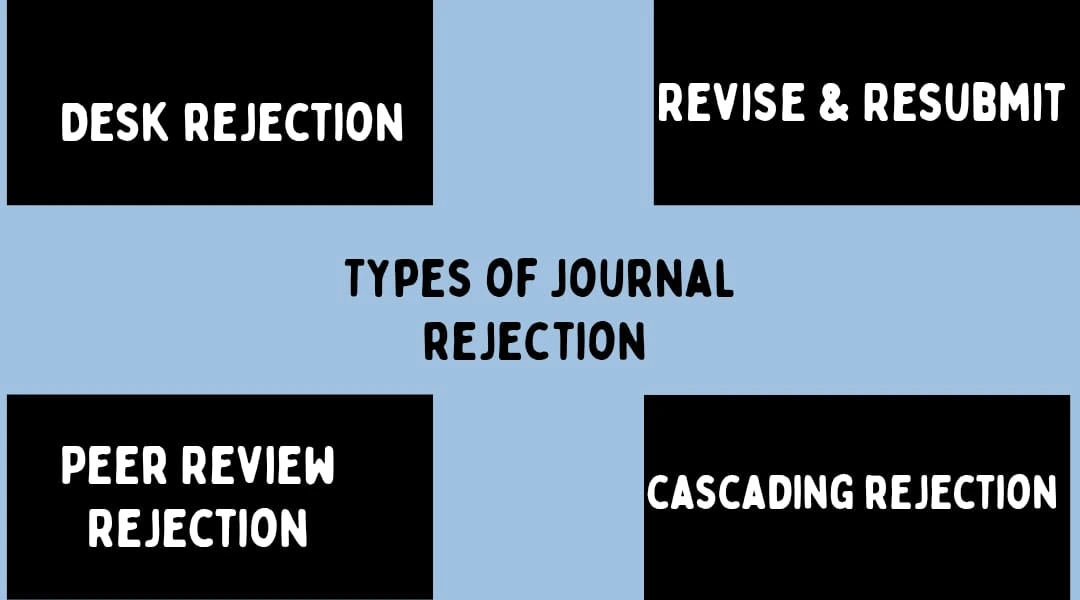
Desk Rejection
- No peer review
- Quick decision (2–7 days)
- Triggered by scope, formatting, or weak framing
Interpretation:
Your paper wasn’t even considered competitive.
Learn more from What Happens After a Desk Rejection — A Clear Roadmap for Researchers?
Peer Review Rejection
- Evaluated by experts
- Includes detailed feedback
Interpretation:
Your research has potential—but needs great improvement.
Learn more from Understanding the Peer Review Process: How It Works and How to Respond.
Revise & Resubmit (R&R)
- Conditional acceptance
- Requires structured revisions
Interpretation:
You’re close. Don’t mess this up.
Learn more from the Journal Revision Process.
Cascading Rejection
Some journals transfer your paper to lower-tier journals.
Interpretation:
Your work is publishable—but not at the current level.
Journal Rejection Rates Across Disciplines
Rejection rates aren’t universal—they vary by field.
STEM Journals
- Extremely competitive
- High methodological expectations
- Rejection rates often exceed 80%
Social Sciences
- Moderate competition
- Strong emphasis on theory + interpretation
Humanities
- Lower submission volume
- Heavy focus on originality and argumentation
Understanding this helps you set realistic expectations.
Journal of Rejection: A Mindset Shift
Think of every rejection as part of your personal journal of rejection—a dataset of feedback.
Instead of reacting emotionally, track:
- Reasons for rejection
- Reviewer comments
- Patterns in feedback
Over time, this becomes a strategic advantage.
You stop guessing—and start improving systematically.
How to Avoid Journal Rejection and Increase Publication Success
No shortcuts. Just smart execution.
1. Reverse Engineer the Journal
Before submitting:
- Analyze 5–10 recent papers
- Identify writing style
- Observe structure and tone
Then align your manuscript accordingly.
This single step separates accepted papers from rejected ones.
Read: How to Analyze Previously Published Papers to Pick Your Journal?
2. Fix Your Abstract (Non-Negotiable)
Your abstract is your first filter.
A strong abstract:
- Defines the problem clearly
- Shows novelty
- Presents key results
- Ends with implications
Weak abstracts = instant rejection.
Read: How to Write an Abstract: A Step-by-Step Guide?
3. Build a Strong Introduction
Your introduction should:
- Frame the research gap
- Establish importance
- Lead logically to your objective
Avoid:
- Overly broad background
- Irrelevant citations
- Weak problem statements
4. Strengthen Your Methods Section
Transparency is everything.
Your methodology must:
- Be reproducible
- Justify design choices
- Clearly explain data collection
5. Upgrade Your Discussion Section
This is where most papers collapse.
A strong discussion:
- Interprets results (not repeats them)
- Compared with existing studies
- Acknowledges limitations
- Suggests future research
6. Eliminate Structural Weakness
Fix:
- Logical flow
- Paragraph transitions
- Redundancy
Clear structure = higher readability = better reviewer response.
7. Use Professional Editing
At higher levels, editing is not optional.
Even minor issues in:
- Grammar
- Tone
- Clarity
…can cost you acceptance.
That’s why many researchers rely on Professional Editing Insights at "Editing vs Proofreading – Difference and Why You Need Both."
Advanced Strategies to Beat High Journal Rejection Rates
Now we go beyond the basics.
Strategy 1: Pre-Submission Peer Review
Get feedback before submission:
- From colleagues
- From mentors
- From editing professionals
Early critique reduces rejection risk massively.
Strategy 2: Target Journal Timing
Some journals:
- Have seasonal submission spikes
- Prioritize trending topics
Submitting at the right time increases visibility.
Strategy 3: Optimize Keywords and Title
Your title should:
- Be specific
- Reflect your contribution
- Match journal style
Keywords must align with indexing systems.
This improves discoverability—and relevance.
Strategy 4: Cover Letter Positioning
Most authors ignore this.
Your cover letter should:
- Explain why your paper fits the journal
- Highlight novelty
- Show relevance to readers
Done right, it increases editorial interest.
Strategy 5: Ethical Compliance
Violations lead to instant rejection.
Ensure:
- No plagiarism
- Proper citations
- Ethical approvals
Referencing standards from organizations like the Committee on Publication Ethics helps maintain credibility.
How to Deal with Rejection (Without Losing Direction)
Rejection isn’t the problem. Your reaction is.
Step 1: Detach Emotion
Your manuscript is a product—not your identity.
Treat feedback as technical input.
Step 2: Analyze Reviewer Comments
Look for:
- Repeated concerns
- Structural issues
- Methodological flaws
Ignore emotional interpretation. Focus on data.
Step 3: Reposition Strategically
Don’t just resubmit blindly.
Instead:
- Improve weak sections
- Adjust journal target
- Reframe your contribution
Rejection Therapy vs Academic Reality
Concepts like rejection therapy or tools like a college rejection simulator build emotional resilience—but academic publishing operates differently.
Here:
- Feedback is structured
- Rejection is analytical
- Improvement is measurable
You don’t just “get used to rejection.”
You learn how to reduce it systematically.
Journals for Bullet Journal vs Academic Journals (Quick Clarity)
Don’t confuse terms.
- Journals for bullet journal → Personal productivity tools
- Academic journals → Peer-reviewed research platforms
Mixing these contexts leads to misunderstanding—especially for beginners.
Common Myths About Journal Rejection Rates
Let’s kill some myths.
Myth 1: High Rejection = Better Journal
Not always. It often just means higher submission volume.
Myth 2: Rejection Means Low Quality
False. Many rejected papers get published elsewhere successfully.
Myth 3: You Need Connections to Get Published
No. You need:
- Strong research
- Clear writing
- Proper targeting
Myth 4: Editing Doesn’t Matter
Wrong. Presentation directly impacts reviewer perception.
Final Take: Beat the System by Understanding It
Here’s the blunt truth:
- Most authors submit too early
- Target the wrong journals
- Ignore structural issues
Then blame the Journal Rejection Rate.
If you want to win:
- Align with journal scope
- Present clearly
- Improve strategically
Publishing isn’t luck. It’s positioning.
And once you understand that—you stop fearing rejection and start controlling outcomes.