


Research Paper Abstract
When it comes to academic writing, nothing carries more weight in the first 60 seconds of judgment than your research paper abstract. This microscopic block of text is the handshake that determines whether your work gets read, cited, or dismissed. If you treat it as filler, reviewers and editors will treat your paper the same way.
The abstract isn’t a summary; it’s the gateway, the promise, and the shortest argument you will ever write for your research. Done right, it compels peers to engage. Done wrong, it buries your work.
In this article, I’ll break down exactly what makes the research paper abstract the single most strategic paragraph in your entire manuscript — and how to write one that stands up to the highest academic standards.
What Is a Research Paper Abstract?
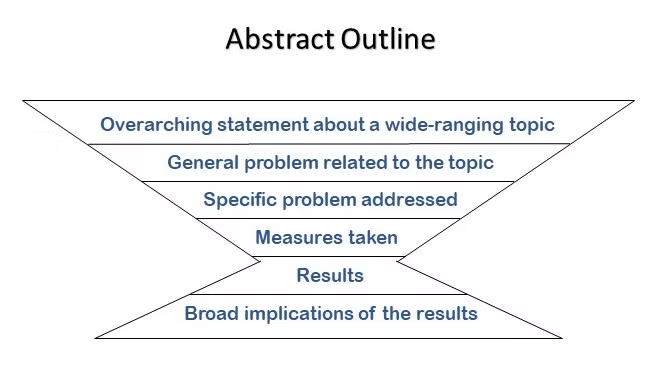
In its simplest form, a research paper abstract is the concise summary of your study’s objectives, methods, results, and implications — usually in 150–250 words. Think of it as the academic equivalent of an executive summary: it’s short, sharp, and demandingly informative.
It serves three essential functions:
- Screening tool for editors and reviewers
- Discovery tool for researchers searching databases
- Snapshot for readers deciding whether to read the full paper
Because of this, your abstract must answer the most critical questions about your work before anyone reads a single section of your manuscript.
According to the Publication Manual of the American Psychological Association, abstracts are essential for helping readers “[identify] the main idea of the research and its relevance” — not embellishment or padding. (APA style guide)
The Abstract vs. Your Longest Paragraph
If you’re used to writing long introductions or sprawling discussion sections, the research paper abstract might feel claustrophobic. But this constraint is a feature, not a bug.
Your longest paragraph doesn’t determine your paper’s fate — the abstract does.
The longest paragraph in your manuscript might unpack complex theory or articulate nuanced results, but it rarely influences the first decision-makers. Conversely, your abstract is read first by editors, reviewers, and screening committees worldwide. That means your abstract must be:
- Clear
- Precise
- Free of jargon
- Structured logically
A verbose or unfocused abstract is an instant rejection magnet.
Paragraph 16 vs. Paragraph 2: Where the Abstract Lives
In many academic manuals, the abstract is treated as a distinct section outside the main numbering of your paper. If your formatting guide suggests mandatory numbering (like in IEEE), your abstract is typically not numbered as Paragraph 1–16 or beyond.
That said, when people talk about “paragraph 16” versus “paragraph 2” in drafts, they’re usually referring to the flow of narrative in the main text — not the abstract. The abstract should be an entirely self-sufficient paragraph.
- Paragraph 2 in the introduction might explain your research gap.
- Paragraph 16, deep in the discussion, might unpack implications and limitations.
- But neither replaces the abstract.
The abstract stands alone both structurally and functionally.
What to Include in a Sample Abstract of Research Paper
| Abstract Component | Purpose | What Reviewers Expect |
| Background Context | Sets the academic problem space | Clear relevance, no literature dump |
| Research Aim | Defines the study’s focus | One precise, answerable objective |
| Methodology | Explains how the study was conducted | Study design + data source only |
| Key Results | Shows what was found | Quantified, specific outcomes |
| Conclusion & Implications | Explains why findings matter | Real-world or scholarly impact |
A strong abstract follows a logical sequence that reflects your study’s intellectual journey. Here’s what to include:
1. Background (1–2 sentences)
Set context without writing a literature review.
2. Research Question or Aim (1 sentence)
State clearly what you investigated.
3. Methods (1–2 sentences)
Describe your overall approach, not procedural minutiae.
4. Key Results (2–3 sentences)
Concrete findings matter more than general statements.
5. Conclusions and Implications (1–2 sentences)
Why should anyone care?
Here’s a sample abstract of research paper to illustrate:
This study investigates the relationship between sleep quality and cognitive performance in medical students. Using a cross-sectional design with validated questionnaires, we measured sleep patterns and administered cognitive tests to 300 participants. Results showed a significant positive correlation between sleep duration and memory recall scores (r = 0.48, p < 0.01), even after adjusting for study hours. These findings suggest that improved sleep quality may enhance academic performance, highlighting the need for wellness interventions in high-stress academic environments.
Notice how every sentence serves a function. Nothing is wasted.
Common Pitfalls That Kill Your Abstract’s Impact
Even experienced researchers stumble with abstracts. Here are the most damaging mistakes — and how to avoid them.
Vagueness
Bad: “This study explores important issues in the field.”
Better: “This study examines the effect of X on Y using Z methodology.”
Results Without Numbers
Bad: “We found a relationship between variables.”
Better: “We found a significant correlation (p < 0.05).”
Jargon
Bad: “We employed advanced psychometric techniques.”
Better: “We used validated surveys to measure outcomes.”
Writing Like an Introduction
Remember: the abstract is not an intro. It’s a self-contained narrative.
How to Critically Analyse a Research Paper Before Abstract Writing
Before you write your abstract, you must examine your own paper like a reviewer. This is the essence of how to critically analyse a research paper — not as a student but as a scientist.
Ask yourself:
- What is the single most important contribution of this study?
- What result will impact future research or practice?
- What limitations must be acknowledged upfront?
- Can someone understand my work without reading anything else?
If you can’t answer these in one crisp sentence each, your abstract isn’t ready.
A hallmark of high-quality abstracts is clarity about contribution. If your main finding is buried in paragraph 16 of your discussion, your abstract likely fails its purpose.
Beyond Words: Ethical Imperatives in Abstract Writing
Your abstract is not just a technical requirement — it’s an ethical contract with your readers. Inflating results, overgeneralizing findings, or implying causation where there is only association is not just bad writing — it’s a breach of research integrity.
Leading academic bodies like the Committee on Publication Ethics (COPE) stress the importance of transparent reporting standards in research summaries. (COPE guideline)
This means:
- No misleading claims
- No selective reporting
- No omitting critical limitations
Your abstract must reflect the truth of your research, not your hopes for citation counts.
Practical Steps to Write a Game-Changing Abstract
Here’s a workflow to elevate your abstract from mediocre to decisive:
- Draft after your final manuscript
Write the abstract after you finish your paper — not before. - Highlight your key results
Extract numbers and outcomes you’ll use verbatim. - Write in active voice
Active constructions are clearer and more precise. Explore more with our guide on Active vs. Passive Voice: Which Is Best for Scientific Writing? - Avoid abbreviations unless universal
If you must abbreviate, define once. - Have peers review your abstract separately
If they can’t explain your study from the abstract alone, it’s not ready. - Check against structured guidelines
For example, many journals require structured abstracts with subheadings.
Real World Relevance: Why Abstracts Matter More Today
In an era of information overload, your abstract is increasingly indexed by search engines and databases like PubMed and Google Scholar. These systems rely heavily on abstract text to rank and retrieve your work.
That means your abstract affects:
- Discoverability
- Scholarly influence
- Media pick-ups and citations
The abstract is not ancient academic ritual — it’s your SEO for science.
And unlike SEO for blogs, academic SEO demands precision and integrity.
Conclusion: Abstract First, Paper Next
If I could leave you with one takeaway, it’s this: The fate of your entire research paper often hinges on a single paragraph. Too many researchers treat the abstract as an afterthought — a checkbox. That mistake costs publications, citations, and credibility.
Crafting a powerful research paper abstract requires honesty, clarity, and ruthless focus on what matters most in your study. When you master that one paragraph, the rest of your paper gets its fair chance.
Write the abstract like your academic reputation depends on it — because it does.