


How Many Revisions Are “Normal” Before Acceptance?
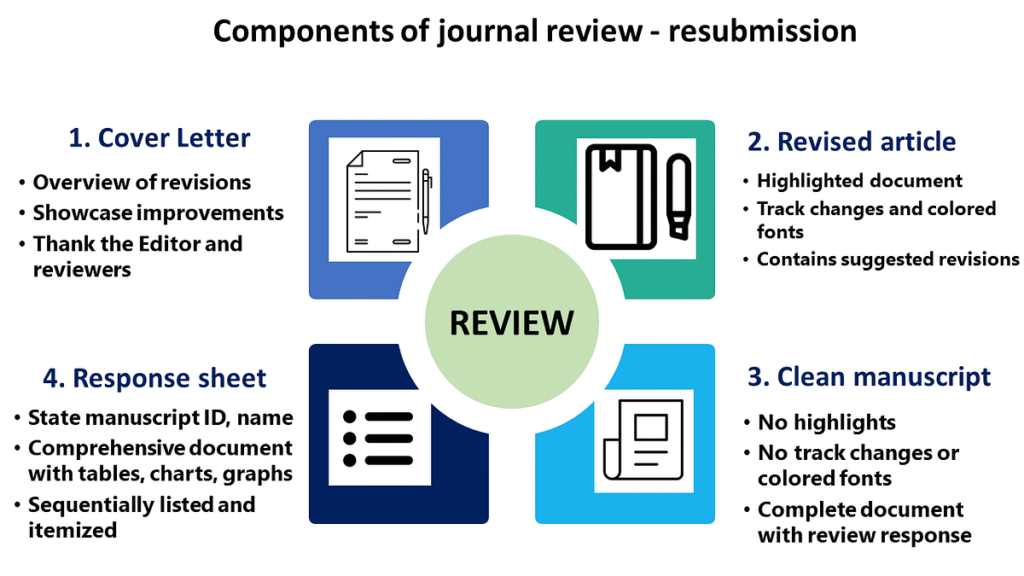
If you’re stuck in what feels like a never-ending loop of reviewer comments, let’s get one thing straight: the journal revision process is not an obstacle—it’s the backbone of credible academic publishing.
Most authors don’t fail because of poor research. They fail because they misunderstand how revisions work, how many are normal, and how editors interpret their responses. This article clears that confusion—cleanly, ethically, and without sugar-coating.
Why Revisions Exist in the Journal Revision Process
Peer review is not about gatekeeping ego; it’s about risk control.
Editors use revisions to verify:
- Scientific validity
- Transparency of methods
- Alignment with journal scope
- Ethical reporting standards
As outlined in Wikipedia’s overview of scholarly peer review, revise-and-resubmit decisions dominate editorial outcomes across disciplines (Wikipedia).
An invitation to revise means your manuscript passed the editorial relevance filter. That alone eliminates most submissions.
What Counts as a “Normal” Number of Revisions?
Across reputable journals, the standard range is 1–3 revision rounds.
Typical editorial progression
| Revision Round | Editorial Meaning | Author Action |
| Round 1 | Manuscript is publishable with changes | Structural & conceptual revisions |
| Round 2 | Editors checking compliance | Clarifications + refinements |
| Round 3 | Final verification | Technical and formatting fixes |
Research analysis reported by Nature confirms that even top-tier journals routinely require multiple revision cycles before acceptance.
Even the lowest journal indexed in Scopus or Web of Science still follows this model—just with less intensity.
Major vs Minor Revisions: Stop Misreading the Signal
This is where many authors panic unnecessarily.
Major revisions usually mean:
- Methodology clarification
- Expanded discussion
- Deeper engagement with prior journal literature
Minor revisions usually mean:
- Language edits
- Citation fixes
- Figure or table adjustments
A major revision is not a warning—it’s an editorial investment. Rejection would be faster and cheaper.
At PaperEdit, we routinely see strong manuscripts delayed simply because authors over- or under-respond to revision requests.
Does Journal Rank Affect Revision Cycles?
Yes—and pretending otherwise is misleading.
Higher-impact journals demand:
- More revision rounds
- Stronger justification of claims
- Explicit reviewer-editor alignment
Lower-tier journals may accept after fewer rounds, but ethical standards remain consistent. Organizations like COPE mandate transparency and fairness across all legitimate journals.
The difference is depth, not ethics.
When Revisions Become a Red Flag
Multiple revisions are normal. Directionless revisions are not.
Watch closely if:
- Reviewer expectations shift every round
- Editors avoid commitment language
- New major critiques appear late
At this stage, blind compliance fails. Strategic editorial interpretation matters more than speed.
This is exactly where PaperEdit’s editorial review service helps authors recalibrate before wasting another cycle.
Using a Revision Timetable Template Properly
A revision timetable template is not optional—it’s a control mechanism.
Used correctly, it helps you:
- Map reviewer comments to manuscript sections
- Track resolved vs pending critiques
- Meet editor deadlines precisely
The U.S. National Institutes of Health emphasizes structured response planning as a key factor in successful revise-and-resubmit outcomes.
Revision chaos kills acceptance probability.
Revision Techniques That Editors Respect
Forget myths. These revision techniques actually move editors toward acceptance:
- Address every reviewer comment
- Quote comments verbatim before responses
- Justify disagreements with evidence
- Keep tone factual, not defensive
Major publishers like Elsevier explicitly instruct reviewers and editors to expect this response structure.
Bullet Journal Journals: Why Some Researchers Use Them
Surprisingly effective: bullet journal journals—digital or handwritten—are used by researchers to log:
- Revision deadlines
- Reviewer demands
- Editorial correspondence
Cognitive offloading improves task completion during long revision cycles. The method is informal; the outcome is not.
How Editors Decide You’re Ready for Acceptance
Editors stop revisions when:
- Core critiques are resolved
- Ethical standards are satisfied
- Confidence in reproducibility is achieved
As The Guardian notes in its coverage of academic publishing, clarity and trust often outweigh novelty alone.
Acceptance is a risk decision—not a reward.
Final Takeaway for Authors
If you’re counting revisions, you’re missing the point.
The real metric is editorial confidence per round.
If revisions are narrowing, you’re close.
If they’re expanding, pause and reassess.
That’s where ethical academic editing shifts outcomes.