


A research portfolio is no longer a luxury in academia. It is a strategic academic asset that demonstrates intellectual credibility, research capability, and scholarly impact.
Universities, research labs, and funding committees increasingly expect scholars to showcase their work beyond a CV. A portfolio proves how you think, how you investigate problems, and how your research contributes to knowledge.
This guide breaks down real research portfolio examples, including student portfolios, professional researcher portfolios, and UX research portfolio examples, while explaining how to structure one effectively.
What Is a Research Portfolio?
A research portfolio is a curated digital collection of your academic work, research interests, and scholarly contributions.
It typically includes:
- Research papers or manuscripts
- Conference presentations
- Research methodologies
- Data visualizations
- Collaborative projects
- Academic leadership or mentorship roles
A typical academic portfolio structure often includes personal information, research activities, publications, teaching contributions, and professional development milestones. (integraali.com)
Example of a Modern Academic Research Portfolio

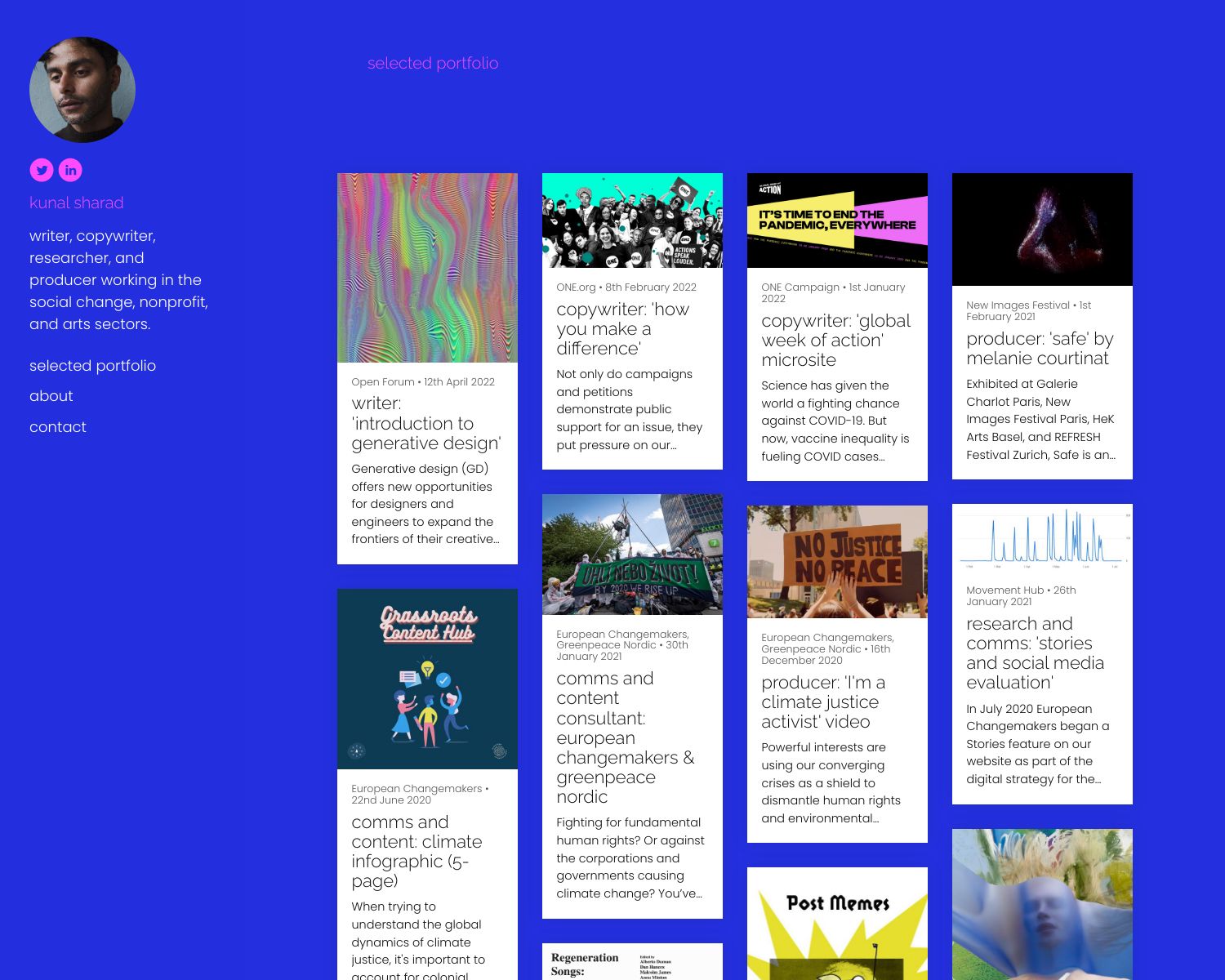
Modern research portfolios are typically hosted on personal academic websites. These sites showcase research projects, publications, and ongoing scholarly work in a structured format.
Key sections often include:
- About the researcher
- Research interests
- Publications and working papers
- Projects and collaborations
- Teaching and supervision
- Contact and academic profiles
Many academics create personal websites specifically to make their research accessible and encourage interdisciplinary collaboration.
Why Research Portfolios Matter in Modern Academia
Academic visibility has shifted online.
Publishing papers is important, but research impact is increasingly measured through visibility, collaboration, and accessibility.
A research portfolio allows scholars to:
- Demonstrate research capabilities before publication
- Showcase ongoing projects
- Highlight interdisciplinary work
- Present data analysis and methodologies
- Build credibility with institutions and collaborators
Researchers who publish their work online also help improve knowledge dissemination and open research practices.
Research Portfolio Examples for Students
Students often believe they need published papers before creating a portfolio. That assumption is wrong.
Even early-stage researchers can build strong portfolios using academic coursework and supervised research.
Undergraduate Research Portfolio Example
Typical components include:
- Senior thesis
- Literature reviews
- Research posters
- Faculty-supervised projects
- Data analysis assignments
Example Portfolio Structure
| Section | Content Example |
|---|---|
| Research Interests | AI ethics, public health policy |
| Thesis Project | Undergraduate thesis summary |
| Methods | Qualitative interviews or statistical analysis |
| Findings | Key results and insights |
| Future Work | Proposed research questions |
Students preparing research manuscripts often refine their writing clarity using structured academic editing strategies discussed in
https://paperedit.org/how-to-improve-logical-flow-in-research-papers/.
UX Research Portfolio Examples
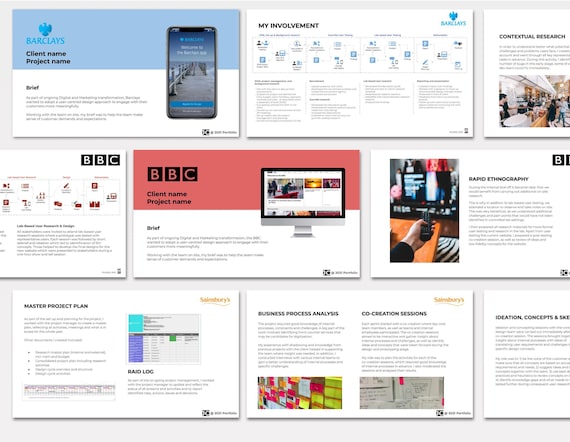
UX researchers require a case-study-driven portfolio.
Strong ux research portfolio examples explain the reasoning behind design and behavioral research decisions.
A strong ux research portfolio example typically follows this framework:
| Stage | Description |
|---|---|
| Problem Definition | Identify user pain points |
| Research Question | Define hypothesis |
| Methods | Interviews, usability tests, surveys |
| Data Analysis | Identify behavioral patterns |
| Insights | Translate findings into product decisions |
| Impact | Show measurable outcomes |
The best UX portfolios prioritize methodology transparency over visual aesthetics.
Research Portfolio Examples for Professional Researchers
Senior researchers structure portfolios around research themes and impact.
Typical elements include:
- Peer-reviewed publications
- Grant projects
- Research collaborations
- Institutional partnerships
- Policy contributions
Example Research Portfolio Structure
| Section | Purpose |
|---|---|
| Research Statement | Defines intellectual focus |
| Publications | Peer-reviewed articles |
| Grants | Funded research projects |
| Collaborations | Multi-institutional work |
| Leadership | Lab direction or mentoring |
Professional researchers frequently track developments in their fields through major research news platforms and academic institutions such as leading research science institutes.
Best Platforms to Host a Research Portfolio
Your portfolio should be accessible, structured, and easy to navigate.
Common hosting options include:
- Personal academic websites
- Academic networking platforms
- Institutional researcher pages
- Open science repositories
Researchers building a portfolio site often explore platform options described in
https://paperedit.org/best-platforms-to-showcase-your-research-portfolio/.
Publishing work online helps establish scholarly visibility long before formal publication.
Common Mistakes in Research Portfolios
Many portfolios fail due to poor structure, not poor research.
Avoid these common issues:
1. Uploading Raw Data Without Context
Always explain:
- research question
- methods
- outcomes
- significance
2. No Research Narrative
A portfolio should tell the story of your research development.
3. Lack of Updates
Academic credibility depends on consistent activity.
If your portfolio has not been updated for years, it signals inactivity.
Researchers preparing manuscripts for publication often follow structured journal-selection strategies explained in
https://paperedit.org/how-to-find-q1-scopus-journals/.
The Future of Research Portfolios
Academic portfolios are evolving into open science ecosystems.
Modern portfolios increasingly include:
- preprints
- open datasets
- reproducible code
- collaborative research outputs
Students entering academia early can strengthen their research identity by publishing work transparently and documenting their research journey.
A well-structured research portfolio does more than present projects.
It demonstrates intellectual credibility and scholarly potential.
For researchers beginning their publication journey, structured guidance is available in
https://paperedit.org/how-to-publish-research-as-a-student/.
Embedded Links
External Authority Links
- “A typical academic portfolio structure often includes personal information, research activities…”
https://integraali.com/dsagas/ap-template/web-ap-eng.html - “Researchers who publish their work online also help improve knowledge dissemination…”
https://en.wikipedia.org/wiki/Open_science - “Many academics create personal websites specifically to make their research accessible…”
https://theacademicdesigner.com/2025/winners-of-the-best-personal-academic-websites-contest-2025/ - “Scholars often share research workflows and scientific materials online…”
https://en.wikipedia.org/wiki/MyExperiment
Internal Links (PaperEdit)
- https://paperedit.org/how-to-improve-logical-flow-in-research-papers/
- https://paperedit.org/best-platforms-to-showcase-your-research-portfolio/
- https://paperedit.org/how-to-find-q1-scopus-journals/
- https://paperedit.org/how-to-publish-research-as-a-student/
- https://paperedit.org/
Yoast SEO
Meta Title
Research Portfolio Examples for Students and Researchers
Meta Description
Discover research portfolio examples for students and researchers. Learn how to build a strong academic portfolio that showcases research impact and credibility.