

A Realistic Breakdown for Researchers
If you’ve ever revised a manuscript based on comments from colleagues, you already know the truth: peer feedback is inconsistent. Sometimes it’s sharp and transformative. Other times, it’s vague, biased, or just plain confusing.
That’s where the comparison between PaperEdit vs Peer Feedback becomes critical—not theoretical, but practical. Researchers aren’t just choosing feedback; they’re choosing outcomes.
This breakdown cuts through the noise and evaluates whether PaperEdit is actually worth it—without hype, without fluff.
The Reality of Peer Feedback in Academia
Peer feedback is foundational to research culture. From lab meetings to journal submissions, it’s built into the system. But let’s be honest: it’s not always reliable.
Most peer review feedback examples fall into one of three categories:
- Surface-level comments (“clarify this section”)
- Personal preference disguised as critique
- Deep, actionable insights (rare, but gold)
The issue isn’t intent—it’s structure. Peer feedback lacks standardization. A colleague might focus heavily on methodology, while another ignores it entirely and critiques writing style.
According to research published by wikipedia, peer review is essential but imperfect, often influenced by bias and inconsistency.
Even in formal review environments, reviewers operate under time pressure. That leads to rushed evaluations, overlooked flaws, and sometimes contradictory advice. You might get one reviewer asking for expansion while another demands cuts—leaving you stuck in revision limbo.
That inconsistency creates a gap between feedback received and feedback needed.
What PaperEdit Actually Does (Beyond Grammar Fixes)
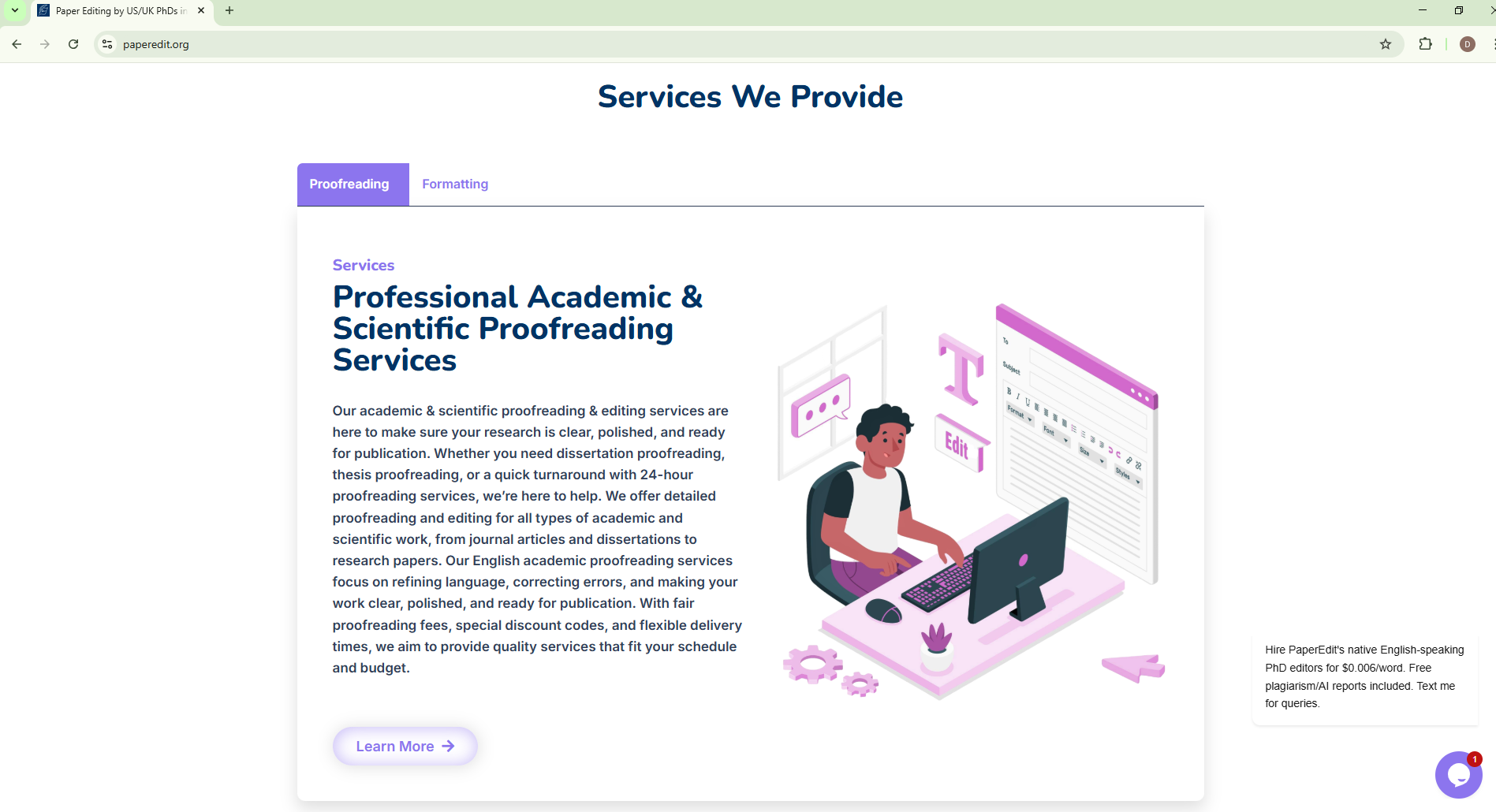
PaperEdit isn’t just editing—it’s structured academic refinement.
Unlike casual peer to peer feedback examples, PaperEdit operates with a system:
- Language clarity (eliminating ambiguity)
- Logical flow between sections
- Alignment with journal expectations
- Ethical tone and academic precision
It’s closer to guided reconstruction than simple correction.
If you explore Paperedit's proofreading services, you’ll notice the focus isn’t just on proofreading—it’s on impact optimization. That’s a crucial difference.
Peer feedback tells you what’s wrong.
PaperEdit shows you how to fix it.
It also bridges a major gap: translation of ideas into publication-ready language. Many researchers—especially non-native English speakers—struggle to express complex findings clearly. PaperEdit addresses that directly without altering the research intent.
PaperEdit vs Peer Feedback: The Core Differences
Let’s get specific.
1. Consistency vs Variability
Peer feedback depends entirely on the reviewer:
- Expertise level
- Time investment
- Personal bias
PaperEdit, on the other hand, follows a consistent editorial framework. Every manuscript goes through structured evaluation.
This matters because inconsistent feedback leads to fragmented revisions. One section improves while another deteriorates.
2. Depth of Analysis
Most peer feedback examples don’t go beyond surface issues. Even strong reviewers may skip:
- Logical transitions (Explore more in How to Improve Logical Flow in Research Papers)
- Argument coherence
- Narrative flow
PaperEdit explicitly targets these.
For example, instead of saying “this section is unclear,” it restructures the paragraph so clarity is built in.
That’s the difference between feedback and intervention.
3. Speed and Accessibility
Let’s be real—peer feedback is slow.
You wait for:
- Colleague availability
- Review cycles
- Follow-up discussions
PaperEdit eliminates this bottleneck. You can get structured revisions without waiting weeks.
If you’ve ever struggled with delayed feedback, you’ll relate to insights shared in How to Respond to Reviewer Comments Without Destroying Your Manuscript, where timing is often the biggest hidden barrier.
4. Objectivity vs Bias
Peer feedback is human—and that means bias is unavoidable.
Examples of bias in peer review feedback examples include:
- Favoring familiar methodologies
- Dismissing unconventional ideas
- Overvaluing stylistic preferences
PaperEdit reduces this by focusing on universal academic standards rather than personal opinion.
This aligns with concerns raised by Nature where bias in peer review has been widely discussed.
5. Accountability and Traceability
Here’s something rarely discussed: accountability.
Peer feedback often comes informally—comments in a Google Doc, quick emails, or verbal suggestions. There’s no structured record of why changes were made.
PaperEdit, however, creates a traceable revision process. Every edit has a purpose:
- Why a sentence was restructured
- Why a section was reordered
- Why terminology was adjusted
This makes it easier to justify changes during journal resubmission.
Understanding Positive vs Negative Feedback in Research Editing
Not all feedback is equal—and not all criticism is helpful.
Negative Feedback (Common but Risky)
Typical negative feedback sample feedback negative examples include:
- “This doesn’t make sense.”
- “Rewrite this section.”
- “Weak argument.” ( Learn how to fix them in our guide Weak Arguments in Academic Papers (And How to Fix Them))
These comments highlight problems but offer no solutions. This is what’s known in systems theory as feedback inhibition—where criticism slows progress instead of improving it.
Positive Feedback (Constructive and Actionable)
Good feedback looks like:
- “This argument would be stronger if supported by X study.”
- “Consider restructuring this paragraph to emphasize your main claim.” ( Learn more from Paragraph Structure in Academic Writing)
PaperEdit leans heavily into this model—structured, actionable, and forward-moving.
For context on how feedback systems operate, see wikipedia's definition of negative feedback, which explains how poorly structured feedback can limit system performance.
Real Examples: What Peer Feedback Looks Like vs PaperEdit Output
To make this practical, let’s compare.
Scenario: Weak Discussion Section
Peer Feedback Example:
- “Expand discussion.”
- “Link results better to literature.”
PaperEdit Output:
- Rewrites opening paragraph to clearly restate research objective
- Integrates citations more logically into argument
- Strengthens transitions between findings and implications
This is where peer to peer feedback examples fall short—they point in the right direction but don’t walk you there.
Scenario: Overly Complex Sentences
Peer Feedback Example:
- “Sentence too long.”
PaperEdit Output:
- Breaks sentence into digestible parts
- Maintains technical meaning
- Improves readability without oversimplification
That level of execution is what transforms a manuscript.
Where Peer Feedback Still Wins
This isn’t a one-sided argument. Peer feedback has advantages that PaperEdit cannot replace.
1. Domain Expertise
Colleagues in your field understand nuances that editors may not fully grasp:
- Emerging theories
- Experimental limitations
- Field-specific jargon
This is especially true in highly specialized disciplines.
2. Idea Development
Peer discussions often spark new ideas. A colleague might challenge your hypothesis in ways that improve your research direction—not just your writing.
This is something no editing service can replicate.
3. Collaborative Growth
Academic collaboration builds long-term skills. Regular exposure to peer feedback examples helps researchers develop critical thinking and reviewing ability.
Over time, this improves not just your papers—but your perspective as a researcher.
Where PaperEdit Clearly Outperforms
Now the critical part: where PaperEdit delivers unmatched value.
1. Final Manuscript Polishing
Peer feedback rarely prepares a paper for submission-ready quality. PaperEdit does.
From sentence flow to structural coherence, it ensures your manuscript meets publication standards.
2. Clarity and Readability
Many researchers underestimate how much poor writing affects acceptance rates.
Clarity in scientific writing significantly influences reviewer decisions.
PaperEdit directly addresses this by refining language and structure simultaneously.
3. Time Efficiency
Time is a resource researchers don’t have.
Instead of juggling multiple rounds of unclear peer comments, PaperEdit delivers consolidated, actionable revisions.
This is particularly useful when facing tight deadlines or resubmissions.
4. Confidence Before Submission
One underrated advantage: confidence.
Submitting a manuscript after mixed peer feedback often feels uncertain. You’re not sure if you’ve addressed all concerns—or introduced new issues.
PaperEdit provides a level of editorial assurance. The manuscript doesn’t just feel better—it reads better, structurally and logically.
The Hidden Cost of Relying Only on Peer Feedback
Most researchers don’t calculate this—but they should.
Relying solely on peer feedback can cost:
- Weeks of delays
- Multiple revision cycles
- Increased risk of rejection
Journals expect clarity, precision, and structure—not just good ideas.
When those expectations aren’t met, even strong research gets rejected.
This is where many researchers misjudge the value of editing. It’s not about fixing language—it’s about reducing friction between your research and the reviewer’s understanding.
Realistic Scenarios: When to Choose What
Let’s break it down practically.
Use Peer Feedback When:
- You’re in early drafting stages
- You need conceptual input
- You want to test ideas informally
Use PaperEdit When:
- Your manuscript is near submission
- Reviewer comments need structured responses
- Clarity and coherence are critical
If you’re dealing with revision fatigue, the workflow outlined in Journal Revision Process
can be a game-changer.
The Hybrid Approach: The Smartest Strategy
The smartest researchers don’t choose between PaperEdit vs Peer Feedback—they combine both.
Here’s how:
- Draft your manuscript
- Get peer feedback for conceptual strength
- Revise based on insights
- Use PaperEdit for final refinement
This layered approach ensures:
- Strong ideas (peer feedback)
- Clear execution (PaperEdit)
It’s not about replacing one with the other—it’s about sequencing them correctly.
The Verdict: Is PaperEdit Worth It?
Short answer: yes—but only if you use it at the right stage.
PaperEdit is not a brainstorming tool. It’s not a replacement for academic discussion.
It’s a precision tool for:
- Refinement
- Clarity
- Submission readiness (Learn more from the guide Publish Research as a Student)
If your manuscript is already conceptually sound but struggling with execution, PaperEdit is worth it.
But if your research itself is weak, no amount of editing will fix that.
That’s the honest truth.
Final Takeaway
The debate around PaperEdit vs Peer Feedback isn’t about superiority—it’s about purpose.
- Peer feedback builds your research
- PaperEdit builds your manuscript
Confusing the two leads to frustration.
Understanding the difference leads to better papers—and ultimately, better publications.