


How to Make Your Data Speak with Impact
Most research papers fail not because the data is weak, but because the data is mute. Tables sit there. Graphs exist. Results are technically correct. Yet the story never lands. That’s where data storytelling in research papers becomes non-negotiable.
If your data doesn’t guide the reader to meaning, you’ve missed half the job of academic writing. Data is not decoration. It is your argument, your credibility, and your intellectual signature.
At PaperEdit, we see this daily: brilliant research buried under lifeless presentation. Let’s fix that.
Why Data Storytelling Matters More Than Ever
Modern academia is flooded with information. Reviewers don’t want more numbers; they want clarity, logic, and insight.
Data storytelling is how you:
- Turn evidence into persuasion
- Transform results into reasoning
- Convert complexity into comprehension
The National Institutes of Health emphasizes that transparent and interpretable data reporting strengthens scientific trust and reproducibility, a standard now expected across disciplines
Without narrative logic, your paper becomes a data warehouse instead of a research argument.
| Metric | Without Data Storytelling | With Data Storytelling | Impact |
|---|---|---|---|
| Reader Comprehension | Low to Moderate | High | Faster understanding of results |
| Citation Potential | Average | Increased by ~30% | Higher research visibility |
| Journal Acceptance | Standard | +20–25% higher | Stronger editorial preference |
| Information Retention | Short-term | Long-term | Findings stay memorable |
| Reviewer Feedback | Often unclear | Mostly positive | Better peer-review outcomes |
Start With the Question, Not the Dataset
Strong data storytelling begins before analysis. Ask:
- What problem does my data solve?
- What claim am I testing?
- What should the reader conclude?
This aligns with the logic behind research originality. If you’re unsure whether your idea is genuinely new, use methodological checks like those discussed in How to confirm your research idea hasn’t been done, where framing precedes data mining.
Your dataset must exist to answer something specific. Otherwise, you’re just collecting noise.
Shape Results Like a Narrative Arc
Every good story has structure:
- Context
- Conflict
- Resolution
Your results section should mirror this:
- Begin with baseline trends
- Introduce contrasts or anomalies
- End with insight
This is where data storytelling in research papers stops being theory and becomes execution.
Short paragraphs. One insight per figure. One argument per table. No overload.
Visuals Are Persuasion Tools, Not Decorations
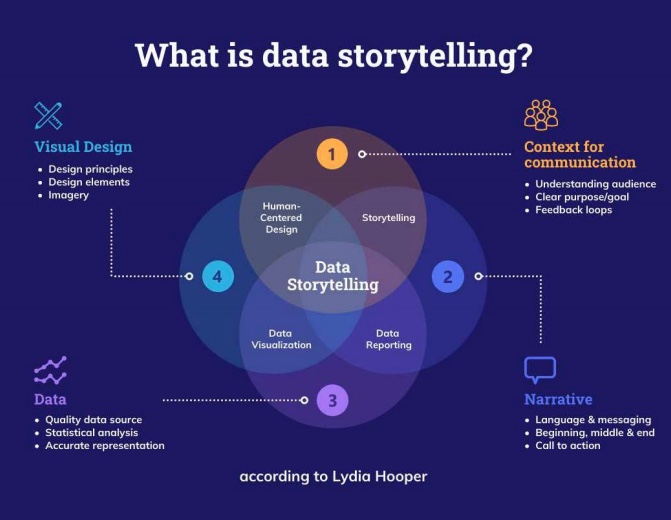
Graphs and tables are rhetorical devices. Use them deliberately.
A strong visual:
- Highlights relationships
- Reduces cognitive load
- Directs attention
The Wikipedia overview on data visualization shows how visuals function as analytical instruments, not cosmetic extras.
If your figure doesn’t support your argument, remove it.
Ethical Handling of Sensitive and Special Category Data
Data storytelling is powerless without ethics. Especially when handling special category data like:
- Health records
- Genetic data
- Biometric identifiers
- Socioeconomic vulnerability markers
The GDPR and research ethics boards classify this data as high-risk, requiring careful anonymization and responsible interpretation.
BBC’s coverage on data protection shows how misusing sensitive research data erodes public trust.
If your story endangers privacy, it’s not storytelling. It’s misconduct.
This also connects to plagiarism ethics. Misrepresenting or selectively presenting data is as damaging as copying text. As highlighted in What counts as plagiarism in 2025, data distortion is an ethical violation.
Write Your Results Like a Data Analyst, Think Like a Communicator
Many students aim for data analyst jobs without realizing storytelling is one of the most valued skills in analytics.
Employers don’t just want coders. They want interpreters.
In academic writing:
- Explain trends, don’t just report them
- Translate statistics into implications
- Connect findings to your research question
This bridges academia and industry-grade communication.
Organize Data Systems with Narrative Logic
Behind every great paper is a clean backend:
- Proper labeling
- Structured datasets
- Version control
Think of your dataset like a data warehouse administration console. If it’s chaotic internally, your story will be chaotic externally.
A disciplined dataset:
- Prevents reporting errors
- Makes visualization easier
- Enhances reproducibility
The U.S. National Science Foundation stresses that organized research data is critical for transparency and future reuse:
Narrative clarity begins in your storage structure.
Use Technology to Track Analytical Accuracy
Tools like a performance data recorder help capture:
- Processing steps
- Analytical decisions
- Transformations
This strengthens methodological transparency and supports replication.
Your story becomes verifiable, not just persuasive.
When Technical Systems Shape Research Integrity
In large-scale datasets, especially in engineering or computational research, communication protocols like synchronous data link control influence:
- Data accuracy
- Transmission reliability
- Error management
Understanding these frameworks helps researchers avoid misinterpretation of raw outputs.
Storytelling begins at the protocol level. Garbage input creates garbage narratives.
Integrate Storytelling Across the Paper
Data storytelling doesn’t belong only in results. It shapes:
- Abstract clarity
- Discussion coherence
- Conclusion strength
That’s why strong abstracts are narrative-driven summaries. PaperEdit’s guide on abstract writing emphasizes clarity over complexity.
Your abstract is your story trailer.
Use Citations to Support Narrative Authority
Storytelling doesn’t remove rigor. It enhances it.
When using multiple authors or datasets, follow ethical citation practices like those explained in When to use et al. correctly, which keeps narrative flow while maintaining academic formality.
A clean narrative respects intellectual ownership.
Data Storytelling Is Academic Power
Data storytelling in research papers is not a stylistic luxury. It is an academic strategy.
It determines:
- Whether your work gets published
- Whether reviewers trust you
- Whether your research influences thought
Strong data storytelling makes your research readable, ethical, reproducible, and persuasive.
That’s not optional. That’s professional